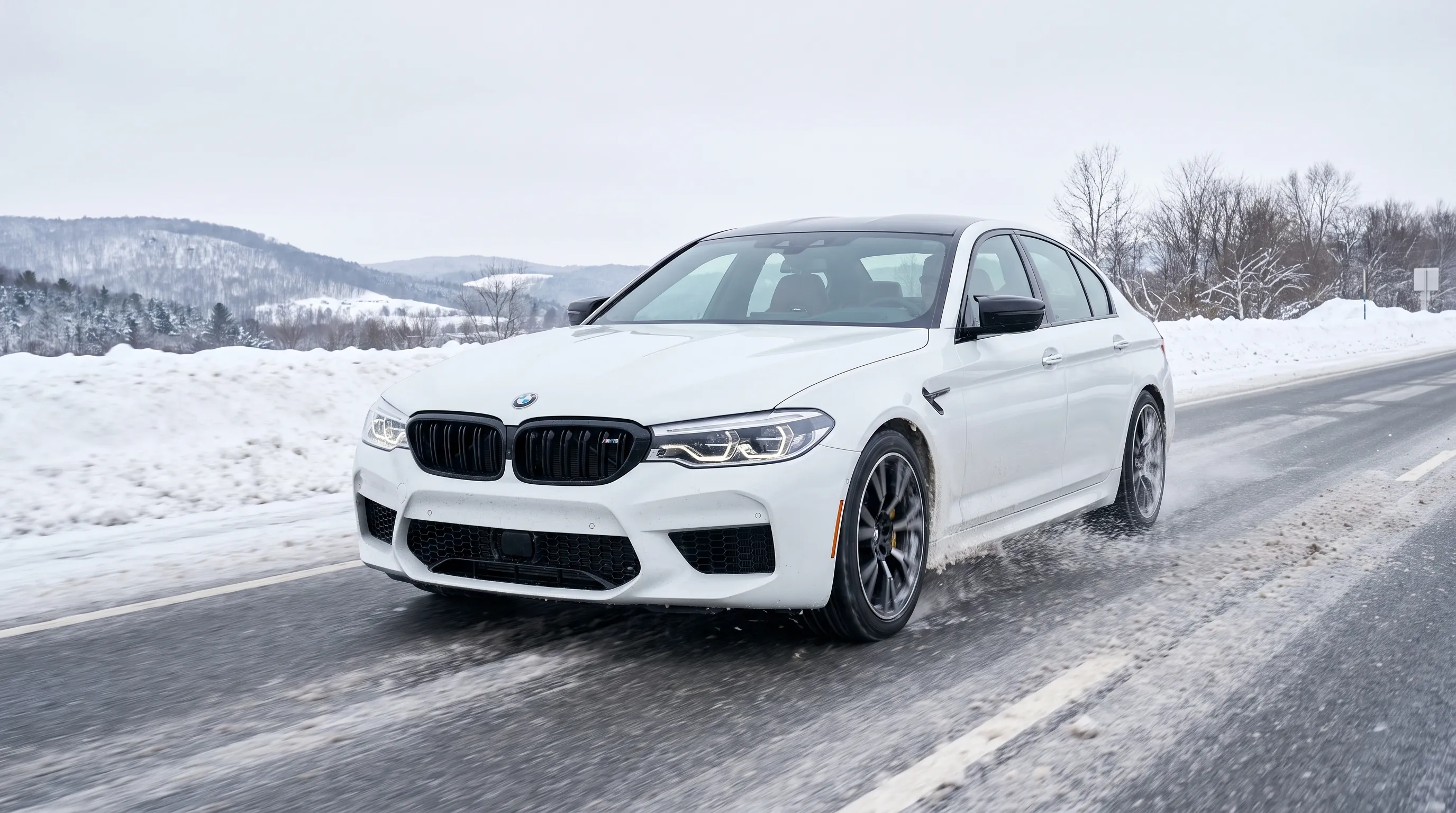
PPF winter protection places a physical polyurethane barrier between the vehicle’s paint and the mixture of road salt, liquid brine, sand, and gravel thrown from winter traffic. It protects the covered exterior panels from chemical residue and abrasive impact, but it is not a substitute for underbody corrosion treatment.
That distinction matters. Premium PPF can preserve a bumper, hood, rocker panel, or lower door through years of winter driving. It cannot protect exposed suspension parts, fasteners, wheel wells, or untreated metal beneath the vehicle.
What Road Salt Does to Automotive Paint
Winter road treatment is no longer limited to dry sodium chloride. Highway agencies also use liquid sodium chloride brine, calcium chloride, magnesium chloride, and blended deicers before and during storms.
These liquids reach the vehicle as a fine spray rather than visible salt crystals. They enter panel gaps, collect behind trim, and mix with dirt, iron particles, fuel residue, and abrasive road grit.
Chloride salts are most dangerous when they reach exposed steel or aluminum. Intact factory clearcoat provides a barrier, but stone chips, scratches, poor repaint work, and unsealed panel edges give the solution a path toward the underlying metal.
Calcium chloride and magnesium chloride can also retain moisture from the air. That means residue may stay damp and chemically active instead of drying into an inert-looking powder.
Paint damage does not come from chemistry alone. Salt crystals, road sand, and gravel become abrasive when trapped beneath wash mitts, brushes, or drying towels. Winter vehicles are often scratched during cleaning rather than during the snowfall itself.
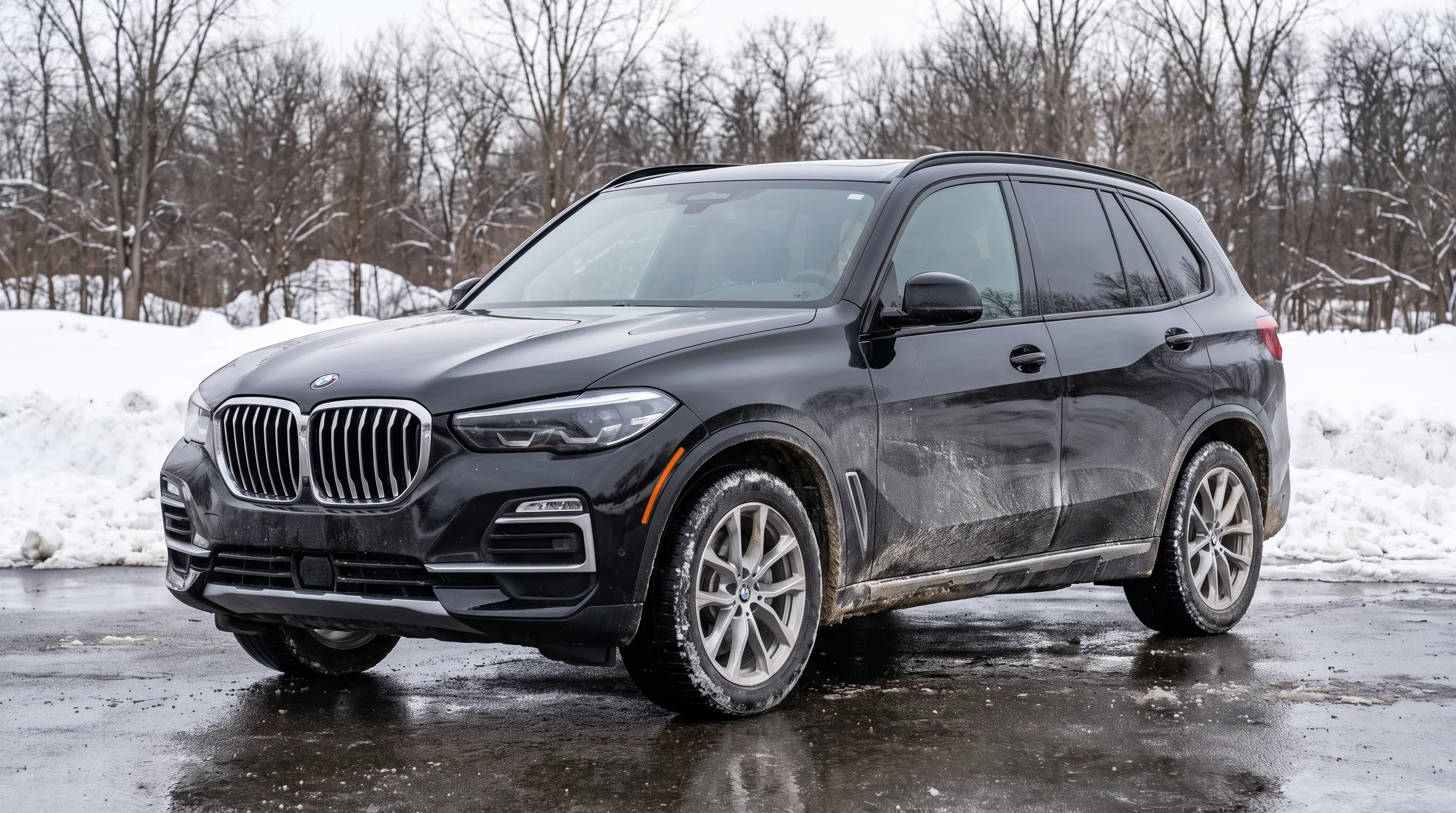
How PPF Winter Protection Works
A Barrier Against Brine and Grit
Paint protection film covers the clearcoat with a removable laminate consisting of a functional top coat, an aliphatic TPU carrier, and a pressure-sensitive adhesive. Road residue contacts the film before it contacts the paint.
The barrier reduces direct exposure to salt spray, insect residue, gritty slush, and repeated winter washing. When contamination is removed correctly, the factory surface remains isolated beneath the film.
Thickness also gives PPF an advantage over ceramic coating. A common automotive construction near 7.5 mil measures approximately 190 microns, providing enough material to deform under small gravel impacts.
A ceramic coating is useful for chemical resistance and easier cleaning, but it does not contain enough physical thickness to absorb a sharp stone strike. The two systems have different jobs, as explained in the ceramic coating vs. PPF guide.
Why TPU Flexibility Matters in Cold Weather
Winter protection requires more than a thick transparent sheet. The film must remain flexible as temperatures fall, recover from impact, and stay attached through repeated freeze-thaw cycles.
If the construction becomes excessively stiff, impacts are concentrated instead of distributed. Edge tension also increases, making lifting more likely around bumper corners, wheel arches, and narrow panel returns.
Crystal Premium Clear Bra uses advanced aliphatic TPU technology developed by Lubrizol as the foundation of its clear protection system. The construction is engineered to balance optical clarity, abrasion resistance, weatherability, and flexibility across changing seasonal conditions.
The top coat adds a second layer of defense by reducing contamination retention and supporting surface recovery after shallow wash marks. It does not make the film immune to staining, so salt and road film should still be removed regularly.
What PPF Cannot Protect
PPF works only where it is installed. A full-front package protects the bumper, hood, fenders, and mirrors, but salt can still reach the roof, doors, rear quarters, underbody, wheel wells, and mechanical components.
The film also cannot reverse corrosion that has already started. Installing PPF over a stone chip with exposed metal traps the existing defect beneath the laminate unless the chip is repaired and sealed first.
Inspect these areas separately before winter:
- Existing chips on the hood, bumper, roof edge, and rocker panels
- Painted seams and folded metal edges beneath the doors
- Wheel wells, suspension hardware, and exposed fasteners
- Drainage channels around the trunk, tailgate, and sunroof
- Previous body repairs with weak paint or unfinished edges
- PPF edges that are already lifting or collecting contamination
Underbody wax, cavity protection, and appropriate corrosion treatments remain necessary where painted PPF cannot be installed. Do not market exterior film as complete rustproofing.
Windshield protection is another separate category. Winter gravel can chip glass even when the painted front end is wrapped. Crystal Vision Windshield Skin provides a dedicated sacrificial surface for that impact zone.
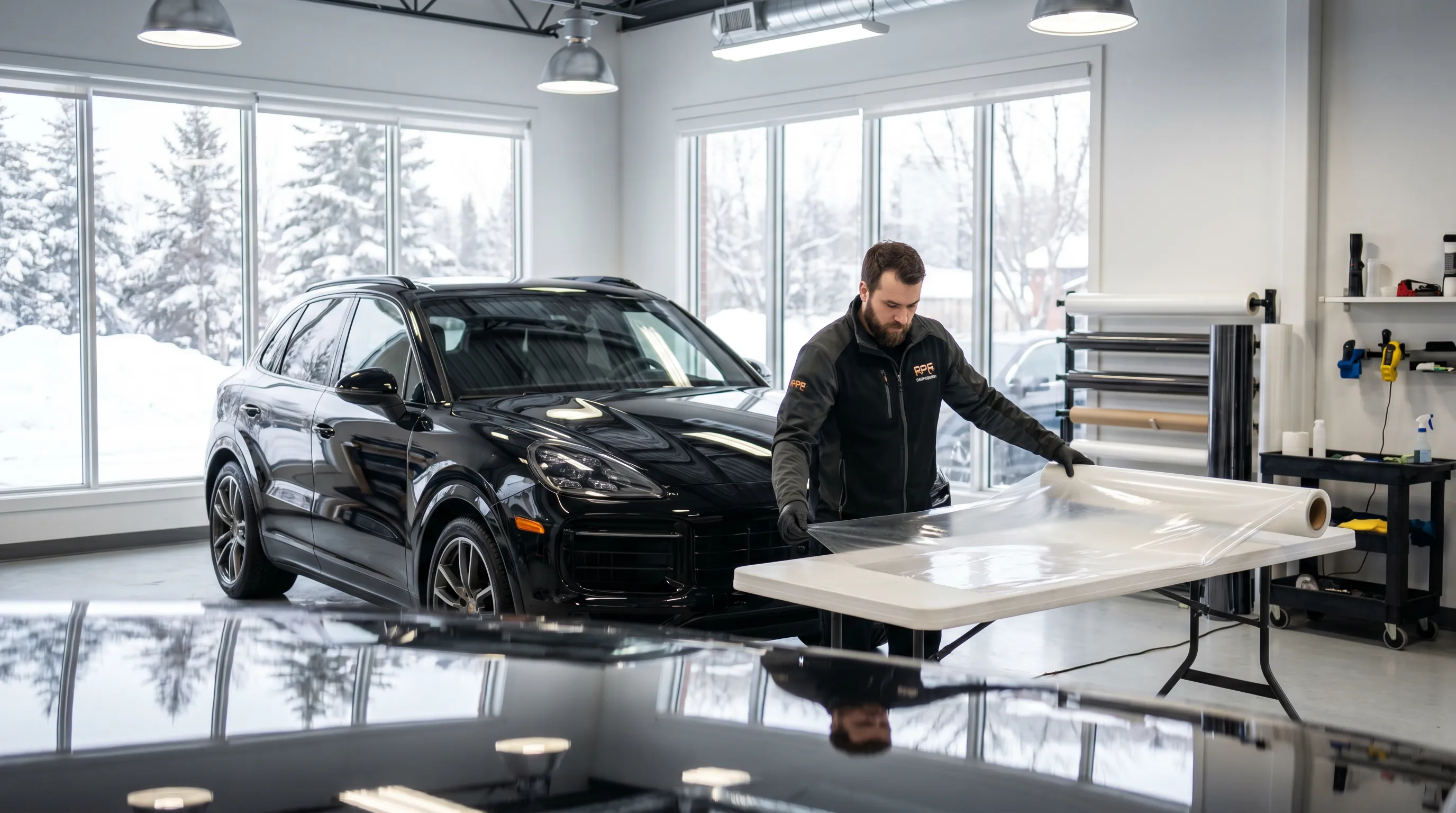
How to Maintain PPF Through Winter
The worst winter-care strategy is waiting until spring. Chloride residue, oily road film, and abrasive dirt accumulate in layers, especially behind wheels and along the lower body.
Rinse the vehicle after heavy salt exposure and whenever a visible white or gray film develops. During continuous winter use, that may mean washing every one to two weeks rather than following a fixed monthly schedule.
Start with a thorough water rinse to remove loose grit before touching the surface. Pay extra attention to the bumper openings, mirrors, rockers, lower doors, wheel arches, and wrapped panel edges.
Use a pH-appropriate automotive shampoo and clean wash media. Strong household detergents can reduce top-coat performance, while automatic brushes can drag trapped salt and sand across the film.
Avoid forcing high-pressure water directly into an exposed film edge from close range. The objective is to flush contamination away, not drive water beneath the adhesive.
Do not pour hot water onto a frozen panel. Rapid temperature change can stress glass, trim, paint repairs, and bonded components. Move the vehicle into a protected environment and let the surface warm gradually before washing.
After cleaning, inspect the film under directional lighting. Look for:
- Lifted edges or trapped contamination
- Deep impact marks that have punctured the film
- Road-tar or iron contamination that normal shampoo did not remove
- Cloudiness caused by residue rather than polymer damage
- Paint chips immediately outside the protected coverage area
A deeply damaged section should be replaced before salt reaches the paint through the opening. Shallow surface marks may recover with time or controlled warmth, but torn TPU cannot regenerate missing material.
How to Build a Complete Winter Protection Package
The best coverage plan follows the path of winter spray. The front bumper and hood receive direct gravel impact. Mirrors and fenders collect spray from surrounding traffic, while rockers and lower doors are blasted by the vehicle’s own tires.
For most daily drivers, a practical winter package includes the complete front end, mirror caps, rocker panels, lower doors, door edges, and the rear impact areas ahead of or behind the wheels.
Full-body PPF is more rational for vehicles driven through long winters, high annual mileage, mountain roads, or heavily treated highways. It also protects soft or expensive factory finishes that would be difficult to match after refinishing.
Crystal Premium Clear Bra is the primary Crystal Shell product for preserving a factory gloss finish through winter exposure. Owners who prefer a satin conversion can use Crystal Satin Stealth, but matte film requires cleaning products that do not polish or increase local sheen.
A compatible ceramic coating may be applied over cured PPF to improve cleaning behavior and reduce contamination retention. It adds maintenance performance; it does not replace the TPU impact layer.
Crystal Shell’s multilayer construction and material approach are explained on the Crystal Shell technology platform. Coverage should still be selected according to actual driving exposure rather than treating every vehicle as identical.
Conclusion: Protect the Impact Zones Before Winter
PPF acts as effective winter armor for painted exterior panels because it separates the clearcoat from salt spray, gritty slush, gravel impact, and aggressive seasonal washing. Its value is highest when installed before the first chips expose metal.
The film does not replace underbody corrosion protection, regular washing, or inspection. Build the system in layers: PPF for painted impact zones, appropriate corrosion treatment beneath the vehicle, and disciplined cleaning throughout the season.
Start with Crystal Premium Clear Bra for winter paint protection, add Crystal Vision Windshield Skin for the glass impact zone, or contact Crystal Shell to define the correct coverage for your climate and driving conditions.