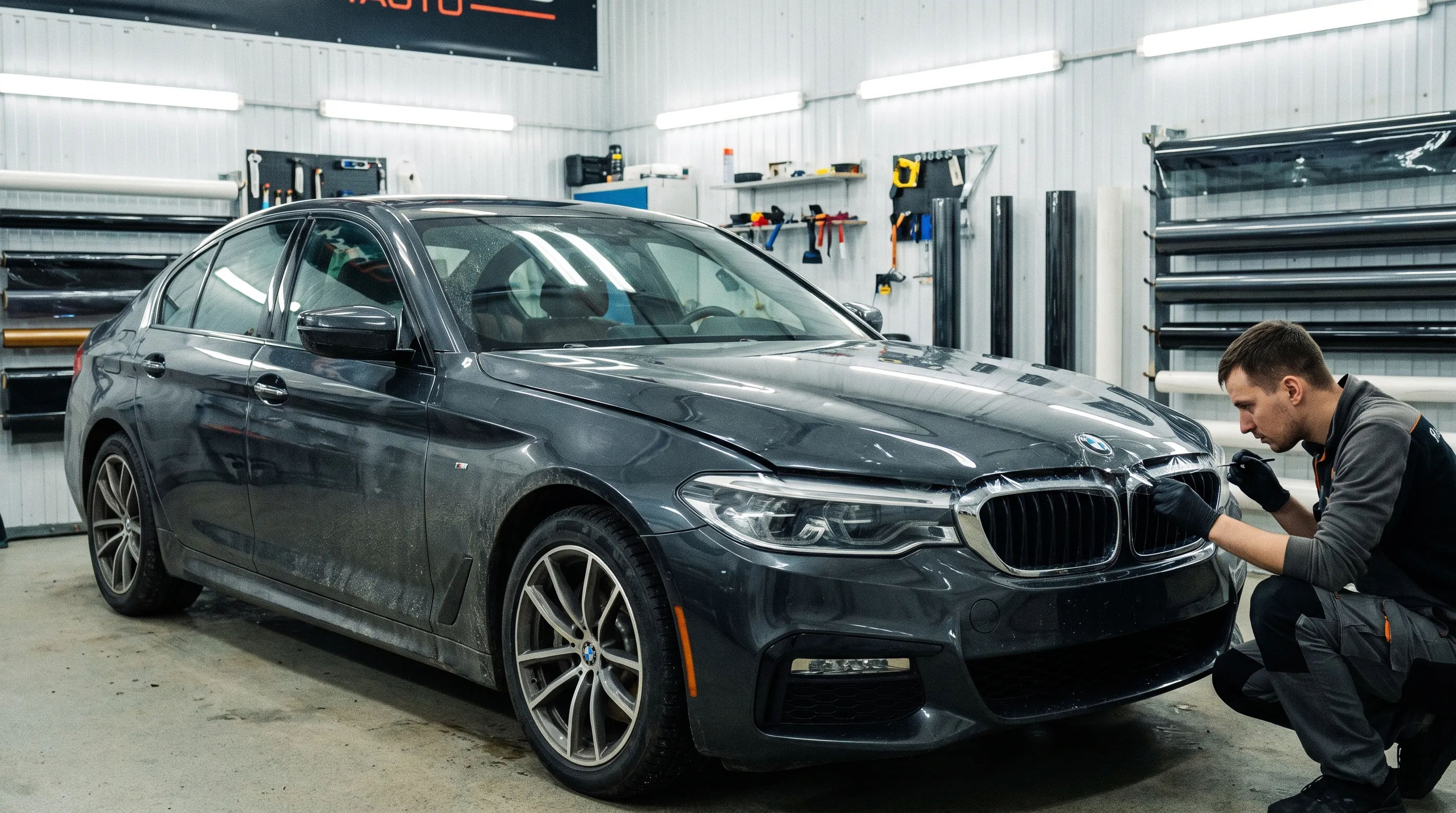
How long does PPF last? A properly installed premium aliphatic TPU film can typically provide five to ten years of useful service, depending on UV exposure, climate, mileage, maintenance, installation quality, and the specific film construction.
A ten-year warranty does not mean the film will look new on the final day and fail the next morning. It means the manufacturer accepts responsibility for defined product failures during that period—provided the installation, registration, maintenance, and claim meet the written terms.
How Long Does PPF Actually Last?
Five to ten years is a reasonable planning range for modern automotive paint protection film. Vehicles stored indoors, washed correctly, and driven in moderate climates may reach the upper end of that range. Outdoor vehicles exposed to intense UV radiation, road salt, high temperatures, and heavy mileage place more stress on the laminate.
Service life should not be measured only by whether the film remains attached. PPF is still functioning as a physical barrier even after its appearance begins to decline, but a premium installation should also preserve acceptable clarity, gloss, color stability, top-coat performance, and edge condition.
A film should be evaluated as a complete laminate:
- The top coat controls stain resistance, surface recovery, gloss, and cleaning behavior.
- The aliphatic TPU carrier supplies elasticity, impact absorption, and structural thickness.
- The pressure-sensitive adhesive maintains contact without excessive distortion or residue.
- The installation determines tension, edge stability, contamination, and moisture evacuation.
If one layer fails early, the useful lifespan of the complete installation is reduced. A strong TPU carrier cannot compensate for an oxidized top coat, and a stable top coat cannot prevent edge lift caused by poor installation tension.
PPF Lifespan and Warranty Are Not the Same
Lifespan describes how long the film remains useful on the vehicle. Warranty describes the manufacturer’s written responsibility for specific failures during a defined period.
A film can remain functional beyond its warranty. It can also require replacement before the warranty expires because of damage that the warranty does not cover, such as collision impact, deep cuts, stone punctures, vandalism, incorrect chemicals, or failure of aftermarket paint beneath the adhesive.
The warranty period is therefore not a countdown timer. It is a risk-allocation document.
Installers should explain this before the sale. Customers often hear “ten-year warranty” and assume every change in water beading, every rock strike, and every damaged edge qualifies for free replacement. That expectation creates unnecessary conflict when the written policy covers manufacturing defects rather than external damage.
5-Year vs. 10-Year PPF Warranty
What a Five-Year Warranty Usually Means
A five-year warranty is not automatic evidence of poor PPF. It may reflect the film’s material class, regional climate assumptions, product positioning, intended application, or the manufacturer’s commercial risk tolerance.
Five years may be sufficient for leased vehicles, short ownership cycles, commercial fleets, temporary color applications, or customers who expect to replace the film after several seasons of heavy use.
The limitation is financial. If a film begins yellowing, cracking, hazing, or delaminating in year six, the owner may have no product coverage even though premium alternatives are sold with longer protection.
For installers, that difference matters because the customer usually returns to the installation shop first. A short supplier warranty can leave the installer managing the labor, removal, replacement material, and customer relationship after the manufacturer’s obligation has ended.
What a Ten-Year Warranty Should Prove
A ten-year warranty is a stronger commercial commitment, but only when it is supported by suitable chemistry, weathering validation, production control, batch traceability, and an operational claims process.
The longer period should reflect confidence in the complete construction, including:
- Color-stable aliphatic TPU
- UV absorbers and light stabilizers
- A durable functional top coat
- An optically stable adhesive system
- Controlled coating and lamination thickness
- Thermal, humidity, stain, and weathering validation
- Consistent production batches
Ten years does not guarantee immunity from wear. A hood exposed outdoors in a hot climate receives more UV and thermal stress than a vertical door on a garage-kept vehicle. Rockers and bumpers also experience more physical damage than protected roof sections.
The value of the longer warranty is that qualifying material failure remains the manufacturer’s responsibility for twice as long as a five-year policy. That can reduce long-tail risk for the customer, installer, and dealer.
| Evaluation factor | 5-year warranty | 10-year warranty |
|---|---|---|
| Suitable ownership cycle | Short to medium term | Medium to long term |
| Manufacturer commitment | Limited to five years | Extended product responsibility |
| Value after year five | Usually outside coverage | May remain covered for qualifying defects |
| Required validation | Product-dependent | Should include stronger long-term evidence |
| Guaranteed physical-damage protection | No | No |
| Automatic proof of film quality | No | No—the written terms and claims process still matter |
What Determines How Long PPF Lasts?
The same product can age differently on two vehicles. Installation location, climate, driving exposure, maintenance, and paint condition all change the stress placed on the film.
UV and Surface Temperature
UV radiation initiates polymer degradation, while heat accelerates oxidation and additive consumption. Horizontal panels receive sustained sunlight and can reach surface temperatures above the surrounding air temperature.
Modern aliphatic TPU strongly reduces the yellowing pathway associated with aromatic polyurethane, but it does not make the complete film permanently immune to weathering. The chemistry is explained in how modern TPU resists PPF yellowing.
Climate and Road Exposure
Winter salt, liquid brine, sand, gravel, insects, fuel residue, traffic film, and repeated freeze-thaw cycles increase chemical and mechanical stress. A highway vehicle accumulating 20,000 miles per year experiences more impact events than a seasonal car driven 2,000 miles.
That does not mean winter use automatically shortens lifespan to five years. It means cleaning intervals and inspection become more important, especially around rockers, wheel arches, bumpers, and wrapped edges.
Installation Quality
Overstretched PPF stores recovery force. That force can later pull material away from a corner or narrow panel return, particularly after repeated heat cycles.
Contamination beneath the adhesive, poor edge cleaning, uncontrolled solution ratios, cut paint, and trapped moisture can also create failures that are unrelated to film chemistry. A manufacturer warranty may exclude installation defects even when the product itself carries ten-year coverage.
Maintenance
PPF should be washed regularly with suitable automotive products. Bird residue, insects, tree sap, road oils, and mineral deposits should be removed before heat and time drive them into the surface.
Abrasive polishing can reduce top-coat thickness. Strong solvents may swell the film or adhesive, while brush washes can create repeated mechanical damage.
A compatible ceramic coating can improve cleaning behavior, but it does not extend the written PPF warranty unless the terms specifically say so. The two systems perform different jobs, as explained in the ceramic coating vs. PPF guide.
What a PPF Warranty Should Cover
Do not judge warranty strength from duration alone. A broad five-year policy may be more useful than a ten-year policy containing narrow definitions, extensive exclusions, or no clear claims process.
Before purchasing, review:
- Which material and manufacturing failures qualify
- How yellowing, cracking, bubbling, haze, and delamination are defined
- Whether top-coat and adhesive failures are included
- Whether coverage includes material only or installation labor
- Whether the warranty is prorated over time
- Whether registration is required after installation
- Whether coverage transfers to a subsequent vehicle owner
- Which maintenance records must be retained
- How repainted panels and aftermarket paint are treated
- Who inspects, approves, and fulfils a claim
Physical damage from road debris is normally not a manufacturing defect. PPF is sacrificial: a film that absorbs a stone impact and becomes punctured may have performed its intended job even though the damaged section now needs replacement.
Improper storage and transportation also require separate treatment. A crushed roll core, damaged edge, creased liner, or heat-deformed roll is a logistics or handling issue rather than long-term weathering failure.
How Crystal Shell Supports Its 10-Year Warranty
Crystal Shell backs its premium PPF range with a 10-year limited warranty. The policy addresses a broad range of qualifying material, manufacturing, return, and replacement cases rather than limiting support to one narrow failure category.
Crystal Premium Clear Bra uses advanced color-stable aliphatic TPU technology developed by Lubrizol. The material platform is selected to support long-term clarity, UV resistance, elasticity, abrasion performance, and resistance to discoloration.
The TPU carrier is combined with a functional top coat and optically controlled pressure-sensitive adhesive. This complete construction is evaluated through laboratory testing, controlled installation, production quality checks, and extended use on real vehicles.
Crystal Shell’s internal shipped-product records currently show a reported defect and return rate below 0.01%—fewer than one reported case per 10,000 shipped units. The limited cases recorded have primarily involved physical damage associated with transportation or improper storage, rather than field yellowing or chemical failure of the installed film.
This statistic should be interpreted correctly. It is internal Crystal Shell quality data, not a universal industry rate. Its value comes from the accompanying batch records, shipping inspections, claim documentation, and feedback from installed vehicles.
Low defect frequency does not eliminate the need for warranty coverage. The purpose of the ten-year policy is to define what happens in the rare case that a qualifying failure occurs.
For installers, this matters more than a claim that defects are impossible. Reliable support means the supplier can identify the batch, evaluate the failure, distinguish material problems from installation or transport damage, and provide a defined resolution.
The full material platform is described on the Crystal Shell technology page. Professional shops can review product access and support through the Crystal Shell dealer program.
When Should PPF Be Replaced?
Do not wait for the film to become severely cracked or brittle before arranging removal. A controlled replacement is easier when the TPU and adhesive still retain predictable physical properties.
Schedule an inspection if you notice:
- Permanent yellow or amber color shift after decontamination
- Persistent haze or loss of optical clarity
- Cracking, embrittlement, or top-coat delamination
- Widespread edge lift or adhesive failure
- Deep punctures exposing the paint
- Staining that cannot be removed safely
- Uneven gloss or satin texture across multiple panels
A damaged panel does not always require replacing the entire vehicle installation. PPF is applied panel by panel, allowing a bumper, hood, rocker, or door section to be replaced separately.
Matching aged film can be more difficult after several years because sunlight, washing, and contamination may change gloss or surface texture. Installers should compare the replacement material under daylight before presenting the vehicle as complete.
Removal should be performed with controlled heat and pull angle. Repainted panels require particular care because weak aftermarket paint adhesion can fail before the PPF adhesive releases.
Conclusion: Read the Coverage, Not Only the Number
Premium PPF commonly serves for five to ten years, but no single number predicts every vehicle. UV exposure, mileage, climate, maintenance, paint condition, and installation quality determine where a specific film lands within that range.
A ten-year warranty provides stronger long-term protection than a five-year warranty only when it covers meaningful failures and is backed by an operational claims process. Duration without clear terms is marketing; duration with material validation, traceability, and support is risk reduction.
Crystal Shell combines a broad 10-year limited warranty with a reported internal defect and return rate below 0.01%, supported by controlled testing and time on real vehicles. Review Crystal Premium Clear Bra or contact Crystal Shell for complete warranty terms and application guidance.