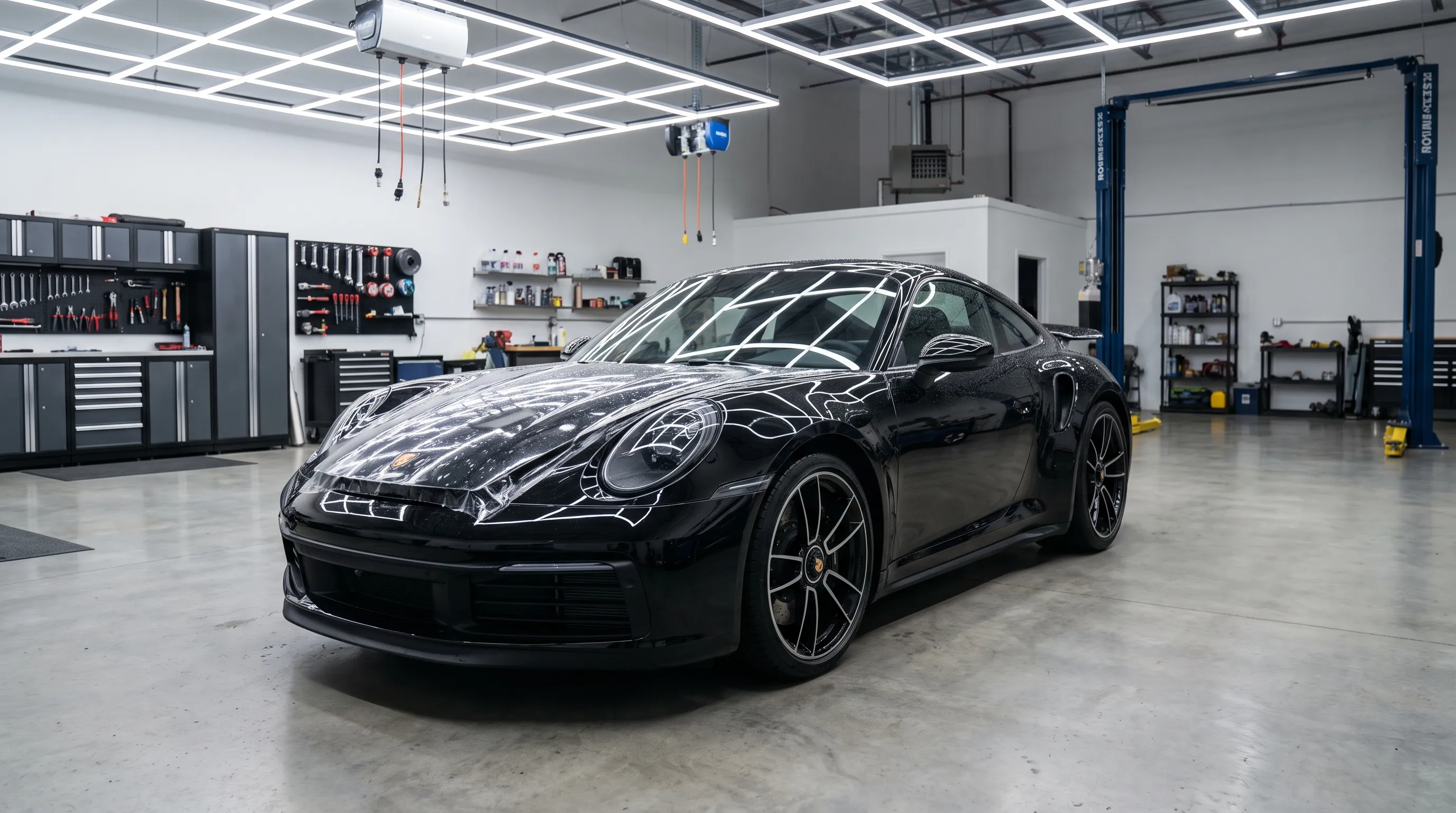
Does PPF yellow? Cheap, poorly stabilized, or severely aged film can—but visible yellowing is no longer an unavoidable characteristic of premium paint protection film. Modern aliphatic TPU, UV-stabilized top coats, improved adhesives, and tighter manufacturing control have fundamentally changed clear-film durability.
Crystal Shell applies advanced aliphatic TPU technology developed by Lubrizol across its premium protection-film range. Products such as Crystal Premium Clear Bra are engineered to improve resistance to UV-driven discoloration while maintaining optical clarity, elasticity, and surface recovery throughout the film's rated service life.
The correct claim is not that any polymer has permanently defeated sunlight. Every exposed material ages. The engineering achievement is delaying oxidation and visible color shift long enough for premium PPF to remain clear, flexible, and visually neutral through years of real vehicle use.
How Modern TPU PPF Resists UV Damage
Aromatic vs. Aliphatic Polyurethane
The "yellowing" reputation of PPF comes from early-generation films that used aromatic polyurethanes. Aromatic diisocyanates contain conjugated ring structures that absorb UV radiation and initiate oxidation. Over time, that reaction produces the warm, amber discoloration commonly associated with old PPF.
Modern premium films use aliphatic polyurethane instead. Aliphatic TPU is built from non-aromatic building blocks that are far less susceptible to UV-driven discoloration. This is the single largest material change separating modern clear film from the yellowing films of the early 2000s.
However, aliphatic chemistry alone is not enough. Without stabilizers, antioxidants, and a functional top coat, even aliphatic TPU can oxidize, lose gloss, develop haze, and eventually shift color. The construction must protect the complete laminate, not only the base polymer.
UV Stabilizers, HALS, and Antioxidants
A modern PPF system uses several additive classes to slow UV degradation. Each interrupts a different failure pathway:
- UV absorbers reduce the amount of damaging radiation that penetrates into the polymer matrix.
- Hindered amine light stabilizers (HALS) interrupt free-radical oxidation after it begins.
- Antioxidants reduce heat-driven degradation during production, installation, and long-term vehicle exposure.
These additives are not permanent in the sense of infinite protection. They are consumed or depleted over time. Their quality, concentration, distribution, and compatibility with the TPU and adhesive determine how long the film remains visually neutral.
The Role of the Top Coat
The functional top coat is the first line of defense. It must remain clear, hydrophobic, stain-resistant, and abrasion-resistant while also screening UV. A weak top coat allows UV, contamination, and mechanical wear to reach the TPU beneath it.
Top-coat failure can appear as haze, loss of water behavior, staining, or increased susceptibility to wash marring. These symptoms may be mistaken for TPU yellowing when they are actually surface degradation. Proper diagnosis requires distinguishing between surface contamination, top-coat change, and deeper polymer discoloration.
How Crystal Shell Improves PPF UV Resistance
Crystal Shell does not rely on the word "TPU" as a complete durability specification. The brand uses advanced color-stable aliphatic TPU technology developed by Lubrizol as the structural foundation for its premium paint protection films.
Lubrizol's latest-generation aliphatic TPU platforms are engineered for applications where transparency, outdoor weatherability, abrasion resistance, and resistance to UV-driven discoloration must operate together. That material foundation gives Crystal Shell a stronger starting point than generic aromatic polyurethane or unidentified commodity TPU.
The TPU carrier is only one part of the system. Crystal Shell combines it with a UV-stabilized functional top coat and an optically clear pressure-sensitive adhesive. Each layer is selected to limit a different failure pathway:
- The aliphatic TPU carrier reduces the primary molecular pathway associated with aromatic polyurethane yellowing.
- UV absorbers reduce the amount of damaging radiation entering the polymer system.
- Hindered amine light stabilizers interrupt free-radical oxidation after it begins.
- Antioxidants reduce heat-driven degradation during production and long-term vehicle exposure.
- The functional top coat limits staining, abrasion, oxidation, and direct chemical attack on the TPU beneath it.
- The optically clear adhesive is formulated to minimize haze and warm color shift below the carrier film.
This layered construction is used differently across the Crystal Shell product range. Each model has a separate optical target, but all depend on controlling UV degradation throughout the complete laminate rather than protecting only the exposed surface.
Crystal Premium Clear Bra
Crystal Premium Clear Bra is engineered for applications where preserving factory gloss and paint color is the priority. Its aliphatic TPU construction is designed to maintain optical neutrality while resisting the UV exposure, road contamination, heat, and repeated washing experienced by daily-driven vehicles.
Color stability is especially critical on white, silver, pearl, and light blue paint. Even a small increase in yellow tone becomes visible when protected and unprotected areas meet. Crystal Premium Clear Bra is therefore designed around complete-laminate clarity rather than a temporary high-gloss showroom appearance.
The film's functional top coat also reduces contamination that can be mistaken for permanent yellowing. Traffic film, insect residue, road oils, mineral deposits, and incompatible detailing products can create a warm surface cast even when the TPU carrier remains chemically stable.
Crystal Satin Stealth
Crystal Satin Stealth uses the same modern approach to aliphatic TPU weatherability but adds another requirement: the satin texture must remain visually uniform as the film ages.
On matte and satin film, degradation does not always appear as obvious yellowing. It may first appear as uneven sheen, darkened contamination, top-coat haze, or glossy patches in stretched areas. The formulation must protect both color neutrality and the controlled microtexture responsible for the satin finish.
This is why Crystal Satin Stealth should not be judged only by a fresh sample on a flat panel. UV stability, stain release, texture retention, and gloss consistency must remain balanced after installation over bumpers, mirrors, fenders, and other compound curves.
Crystal Color Infused PPF
Crystal Color Infused PPF adds pigment stability to the normal requirements of a clear PPF system. The aliphatic TPU carrier must resist oxidation while the color layer maintains hue, saturation, and uniformity under UV exposure.
A colored film can remain physically intact yet still fail visually if the pigment fades faster than the TPU ages. Crystal Shell's material strategy therefore treats the carrier, color system, top coat, and adhesive as one weathering system rather than four unrelated layers.
Across all three models, the objective is not to make an impossible claim of permanent UV immunity. It is to slow color change, oxidation, gloss loss, haze, cracking, and adhesive degradation enough to preserve the intended appearance throughout the product's rated service period.
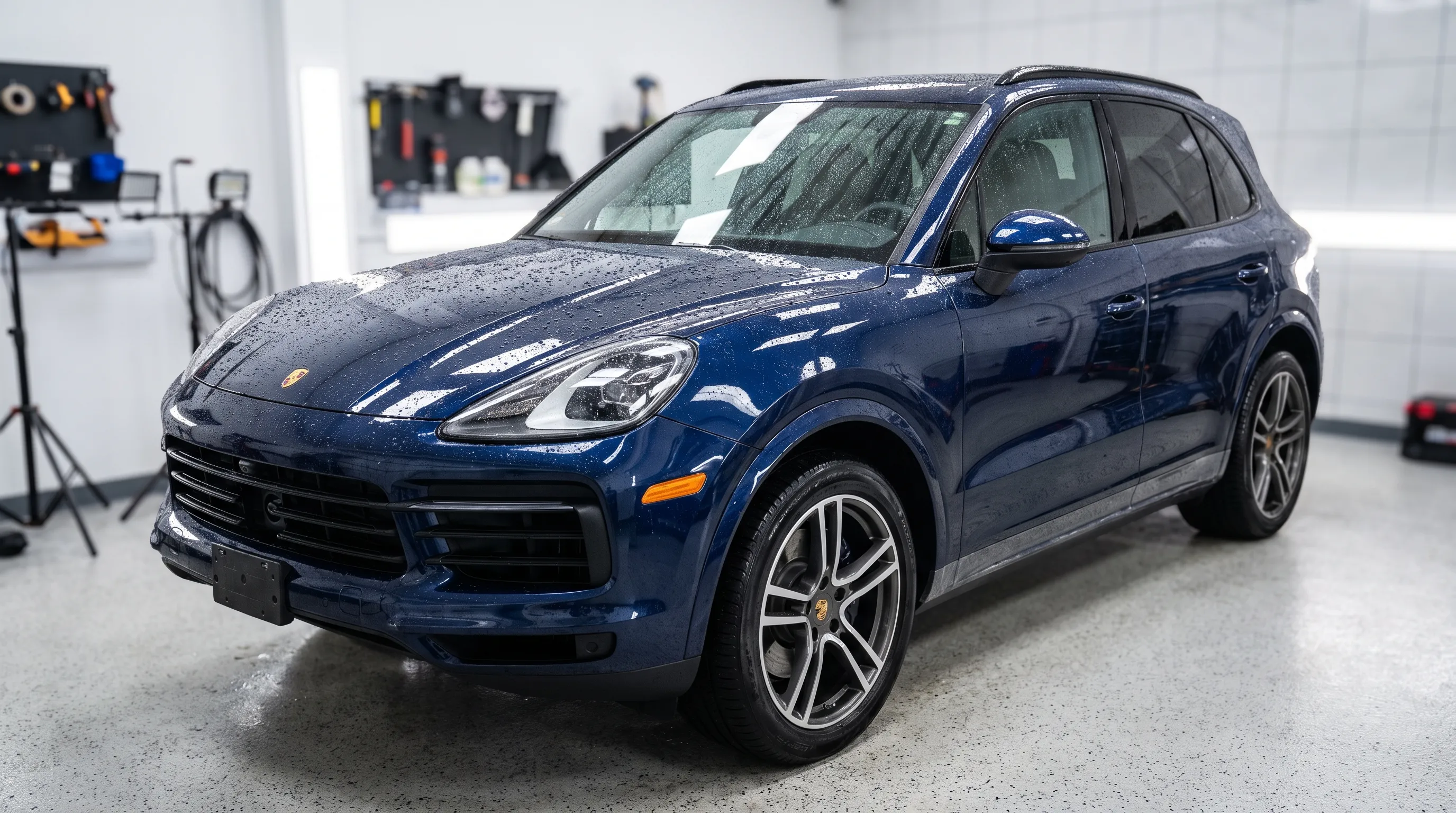
How to Choose and Maintain UV-Resistant PPF
Start by confirming that the carrier film uses color-stable aliphatic TPU. "TPU" alone is not enough because the term also includes aromatic grades that are not suitable for long-term optical applications.
Crystal Shell specifies advanced Lubrizol-developed aliphatic TPU technology for its premium PPF range. Lubrizol's ESTANE ALR material platform is designed specifically for color-stable film and sheet applications, including automotive paint protection film.
Material origin still does not eliminate the need to inspect the completed laminate. Extrusion conditions, top-coat formulation, adhesive chemistry, layer uniformity, storage, and installation can either preserve or undermine the performance of the base TPU.
Use this purchasing checklist:
- Confirm that the film uses aliphatic rather than generic or aromatic TPU.
- Ask whether UV testing was performed on the complete laminate, including top coat and adhesive.
- Request measured color change, haze, and gloss retention after weathering.
- Check whether white and dark painted substrates were included in the evaluation.
- Review heat, humidity, hydrolysis, stain, and thermal-cycling results alongside UV exposure.
- Confirm the manufacturing date, batch number, and recommended storage conditions.
- Read the yellowing warranty definition and determine whether replacement labor is covered.
- Inspect an aged or outdoor-exposed sample rather than relying only on a fresh showroom panel.
For clear factory-finish protection, review Crystal Premium Clear Bra. For a UV-stable satin transformation, compare Crystal Satin Stealth. Owners seeking a new color with physical paint protection can evaluate Crystal Color Infused PPF.
The material architecture behind these products is explained on the Crystal Shell technology platform. Professional installers can also review the Crystal Shell dealer program for product access and technical support.
Conclusion: Modern TPU Changed the Expectation
The belief that every PPF installation will eventually turn visibly yellow comes from older polyurethane chemistry, poorly stabilized materials, weak top coats, contamination, and failures that were once accepted as normal.
Modern color-stable aliphatic TPU has changed that expectation. By using advanced Lubrizol-developed TPU technology alongside UV absorbers, HALS, antioxidants, functional top coats, and optically controlled adhesives, Crystal Shell has substantially improved resistance to discoloration, haze, oxidation, and loss of surface performance.
Crystal Premium Clear Bra is engineered to preserve factory gloss and optical neutrality. Crystal Satin Stealth extends that protection to a controlled satin finish, while Crystal Color Infused PPF combines physical paint protection with a new exterior color.
No responsible material engineer should promise permanent immunity from UV radiation. The modern premium standard is more credible: the film should remain clear, flexible, stable, and visually consistent throughout its rated service period under realistic environmental exposure and proper maintenance.
Review Crystal Premium Clear Bra or contact Crystal Shell to select the correct UV-resistant film for your vehicle, climate, paint color, and installation requirements.