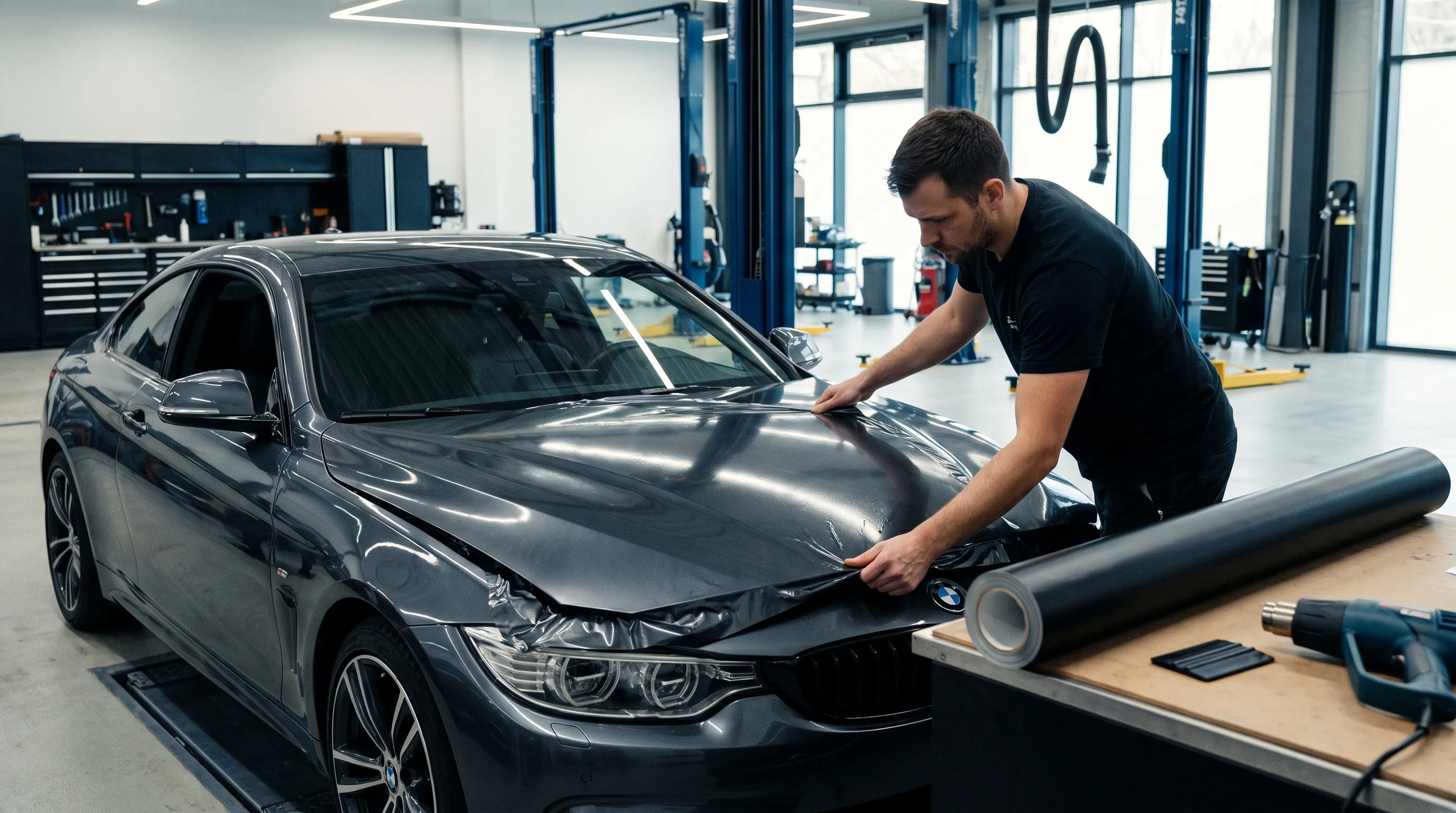
TPU PPF vs. vinyl wrap is a choice between two materials that can change a vehicle’s appearance but deliver fundamentally different results. Vinyl is primarily a styling film. Color TPU PPF combines restyling with a thick, elastic barrier against stone chips, scratches, road debris, and environmental contamination.
Vinyl can look clean and intentional, particularly in matte or satin finishes. Under direct sunlight and linear shop lighting, however, gloss vinyl often shows more surface texture, less optical depth, and a finish that reads as applied film rather than premium paint. Well-engineered color PPF is designed to produce a smoother, deeper, more substantial appearance.
What Is the Difference Between TPU PPF and Vinyl Wrap?
Traditional vehicle wrap is usually manufactured from cast or calendered PVC. Plasticizers and other additives make the material flexible enough to stretch over body panels, recesses, mirrors, and bumpers.
Its primary function is visual transformation. Vinyl offers an extensive selection of colors, printed graphics, textures, metallic effects, chrome finishes, and temporary branding options.
TPU PPF is based on thermoplastic polyurethane. Its segmented polymer structure combines flexible soft regions with harder physical domains, allowing the material to stretch, absorb impact, and recover toward its original form.
Color PPF adds pigment or a color layer to that protective TPU construction. The customer receives a new exterior appearance without giving up the physical barrier expected from paint protection film.
Typical automotive vinyl is considerably thinner than premium PPF. Many wrap films use a face layer around 3–4 mil, while common automotive PPF constructions are approximately 7.5–8 mil, or roughly 190–200 microns.
Thickness is not the only difference. TPU also provides greater elastic recovery, stronger impact absorption, and support for functional self-healing top coats. A thicker PVC film does not automatically gain those properties.
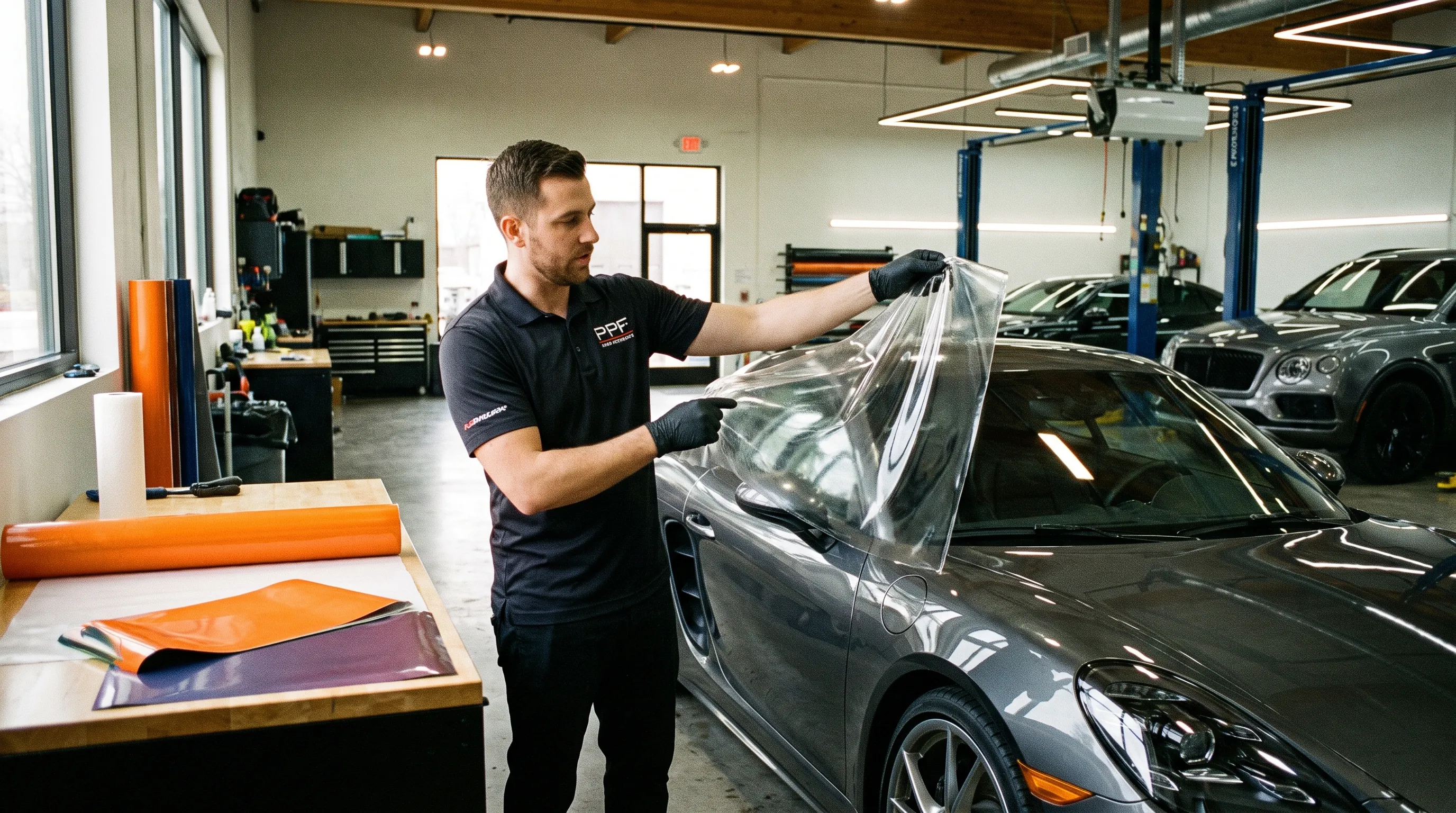
Why Vinyl Wrap Often Looks Less Premium
Gloss Depth and Surface Texture
A vehicle’s visual depth depends on how cleanly light travels through and reflects from the outer surface. Factory clearcoat creates a liquid-looking highlight when the surface is smooth, polished, and optically consistent.
Gloss vinyl often introduces more visible texture. Air-release adhesive channels, a thin PVC face film, installation stretch, and the surface finish created during manufacturing can scatter reflections and reduce perceived depth.
This is why gloss vinyl may look acceptable outdoors but noticeably cheaper under long LED inspection lights. Reflections appear less sharp, body lines lose some contrast, and large flat panels can reveal orange-peel-like texture.
High-quality cast vinyl can still produce an attractive result. The distinction is that it usually looks like premium vinyl, not like a freshly refinished paint surface.
Color TPU PPF uses a thicker optical construction and functional top coat. A strong product can create smoother reflections, deeper color, and a more paint-like surface while retaining the physical mass required for protection.
The difference is most obvious in gloss black, dark blue, red, and other colors that reveal distortion immediately. Matte vinyl hides optical texture more effectively because the intended surface already scatters light.
Aging Changes the Finish
Fresh material is the easiest comparison. The more useful question is how the finish changes after UV exposure, washing, heat, road chemicals, and repeated thermal cycling.
PVC depends on its complete formulation to retain flexibility. Over time, lower-grade vinyl may shrink, stiffen, fade, lose gloss, develop edge lift, or leave more difficult adhesive residue during removal.
Stretch increases the risk. Areas pulled aggressively into bumpers, handles, and deep recesses may become thinner and visually different from unstretched panels.
Color PPF is not immune to aging, but aliphatic TPU provides a stronger platform for outdoor color stability, abrasion resistance, and flexible service. The top coat also helps control staining, gloss retention, and shallow surface marks.
Installers should never promise that either product will remain visually unchanged forever. The commercial advantage of TPU PPF is that its construction is designed around long-term protection and appearance rather than appearance alone.
TPU PPF vs. Vinyl Wrap for Paint Protection
The protection comparison is less subjective than the appearance comparison. Vinyl can shield paint from light contamination and minor superficial contact, but it is not the equivalent of genuine paint protection film.
| Performance factor | Color TPU PPF | Vinyl wrap |
|---|---|---|
| Primary function | Paint protection and color transformation | Color change, graphics, and styling |
| Typical construction | Top coat, color system, TPU carrier, and adhesive | PVC face film and adhesive |
| Stone-chip resistance | Designed to absorb everyday road impact | Limited protection due to lower thickness and elasticity |
| Shallow scratch recovery | Available through a self-healing functional top coat | Generally does not provide equivalent recovery |
| Gloss depth | Typically smoother and more paint-like | More likely to show film texture |
| Color selection | Broad and rapidly expanding | Historically the widest selection |
| Graphics and printing | More specialized | Strong advantage for printed graphics and branding |
| Material cost | Higher | Lower |
| Customer value | Appearance plus physical paint protection | Primarily appearance |
A gravel strike concentrates force into a small area. TPU can stretch and distribute part of that load through its elastic structure before the debris reaches the clearcoat.
Thin vinyl may prevent a light scuff from contacting the paint, but it cannot absorb the same impact energy as a 7.5 mil-class polyurethane laminate. Calling both products “paint protection” creates the wrong expectation.
Color PPF also gives the customer a replaceable sacrificial layer. If a bumper section receives severe road rash, the installer may replace the film while preserving the original paint beneath it.
Neither product stops dents, major collision damage, or every sharp impact. The difference is that TPU PPF is engineered specifically to reduce physical paint damage rather than receiving protection as a secondary side effect.
The material differences are explained further in the TPU vs. PVC PPF guide.
What Installers Notice During Application
Vinyl and PPF require different workflows. A technician who is experienced with dry-applied vinyl is not automatically ready to install wet-applied color PPF at a premium level.
Most traditional vinyl wrap uses dry application with repositionable or air-release adhesive. The installer works the material over the panel using heat, stretch, pressure, and post-heating where required.
Traditional color PPF commonly uses wet installation. Slip solution allows the thicker laminate to move across the panel, while tack solution and squeegee pressure anchor selected areas and evacuate moisture.
Newer dry-apply color PPF systems also exist, so material category alone does not define the installation method. Shops must follow the process developed for the specific adhesive and laminate.
TPU PPF usually requires more control around tension. The material has stronger elastic memory and may pull back from an edge if it is overstretched or anchored over contamination.
Vinyl is thinner and can conform efficiently to complex geometry, but aggressive stretching may reduce color density, change metallic orientation, distort texture, or shorten service life in recesses.
Color PPF can be physically more demanding to handle because of its thickness. A well-designed adhesive and stable TPU carrier make that process predictable rather than effortless.
Installers should evaluate:
- Color uniformity before and after stretching
- Gloss and texture under linear inspection lighting
- Initial tack and repositioning window
- Adhesive disturbance after lifting
- Edge stability after 24 and 72 hours
- Behavior through hot and cold thermal cycles
- Scratch recovery and stain resistance
- Removal from factory and repainted panels
Controlled tools remain important. Clean squeegee edges, safe trimming, reliable tuck tools, and consistent solution equipment reduce variation during thick-film installation. Shops can standardize the process with Crystal Shell Precision Install Tools.
Which Product Should an Installer Sell?
Where Vinyl Still Makes Sense
Vinyl remains the rational choice for temporary branding, commercial graphics, complex printed designs, short ownership periods, and customers whose priority is the lowest-cost color transformation.
It also offers a mature selection of unusual textures, chrome effects, graphics media, and specialty finishes. For fleet advertising, event vehicles, or a temporary styling project, TPU PPF may be unnecessary.
The mistake is selling vinyl as though it provides the same protection, finish depth, and long-term surface behavior as color TPU PPF. That creates dissatisfaction when the customer later notices chips, texture, shrinkage, or reduced gloss.
The sales conversation should begin with the customer’s objective:
- Choose vinyl for economical styling, graphics, or a temporary color change.
- Choose color PPF for premium appearance plus stone-chip protection.
- Choose clear PPF when the factory paint color should remain visible.
- Choose satin PPF when protection and a controlled low-gloss conversion are both required.
Crystal Color Infused PPF
Crystal Color Infused PPF is designed for customers who do not want to choose between restyling and paint protection. It combines a color transformation with the elasticity, thickness, surface recovery, and impact performance of a TPU-based protective laminate.
The range includes a broad spectrum of colors and nuanced shades, allowing installers to offer understated factory-inspired tones, deeper premium colors, and more distinctive visual directions without reverting to conventional PVC wrap.
That variety changes the sales proposition. Color PPF is no longer restricted to a few basic colors while vinyl controls every creative option. Installers can now present protection-first material across a much wider aesthetic range.
Crystal Shell uses advanced color-stable aliphatic TPU technology developed by Lubrizol as the structural foundation of its PPF platform. The material is selected for optical stability, UV resistance, abrasion performance, elasticity, and resistance to discoloration.
The TPU carrier is combined with a functional top coat, color system, and optically controlled adhesive. The target is a complete surface that looks more substantial than vinyl and protects more effectively than a styling film.
Installers should still show customers physical samples. Color appearance changes with paint substrate, lighting temperature, viewing angle, body geometry, and adjacent trim.
Apply each candidate shade to a curved painted panel rather than displaying only a loose swatch. A small flat sample cannot reveal gloss depth, metallic behavior, stretch response, or the way a color changes across a complete vehicle.
For owners who want to retain factory gloss, compare Crystal Premium Clear Bra. Satin transformations are available through Crystal Satin Stealth, while the complete material architecture is detailed on the Crystal Shell technology platform.
Conclusion: Sell the Result, Not Only the Color
Vinyl wrap remains useful, but its strongest argument is styling flexibility and lower initial cost. It generally does not match the physical protection, gloss depth, elastic recovery, or premium surface presence of a well-engineered color TPU PPF.
For installers, color PPF creates a higher-value service: one installation changes the appearance, protects the factory finish, reduces stone-chip exposure, and gives the customer a smoother, more substantial visual result.
Do not claim that every vinyl installation looks bad. Explain the visible and functional trade-offs, place both samples under the same lighting, and let the difference in depth, texture, and construction support the recommendation.
Explore the broad color and shade range of Crystal Color Infused PPF, or contact Crystal Shell to evaluate color options, installation support, and dealer availability.