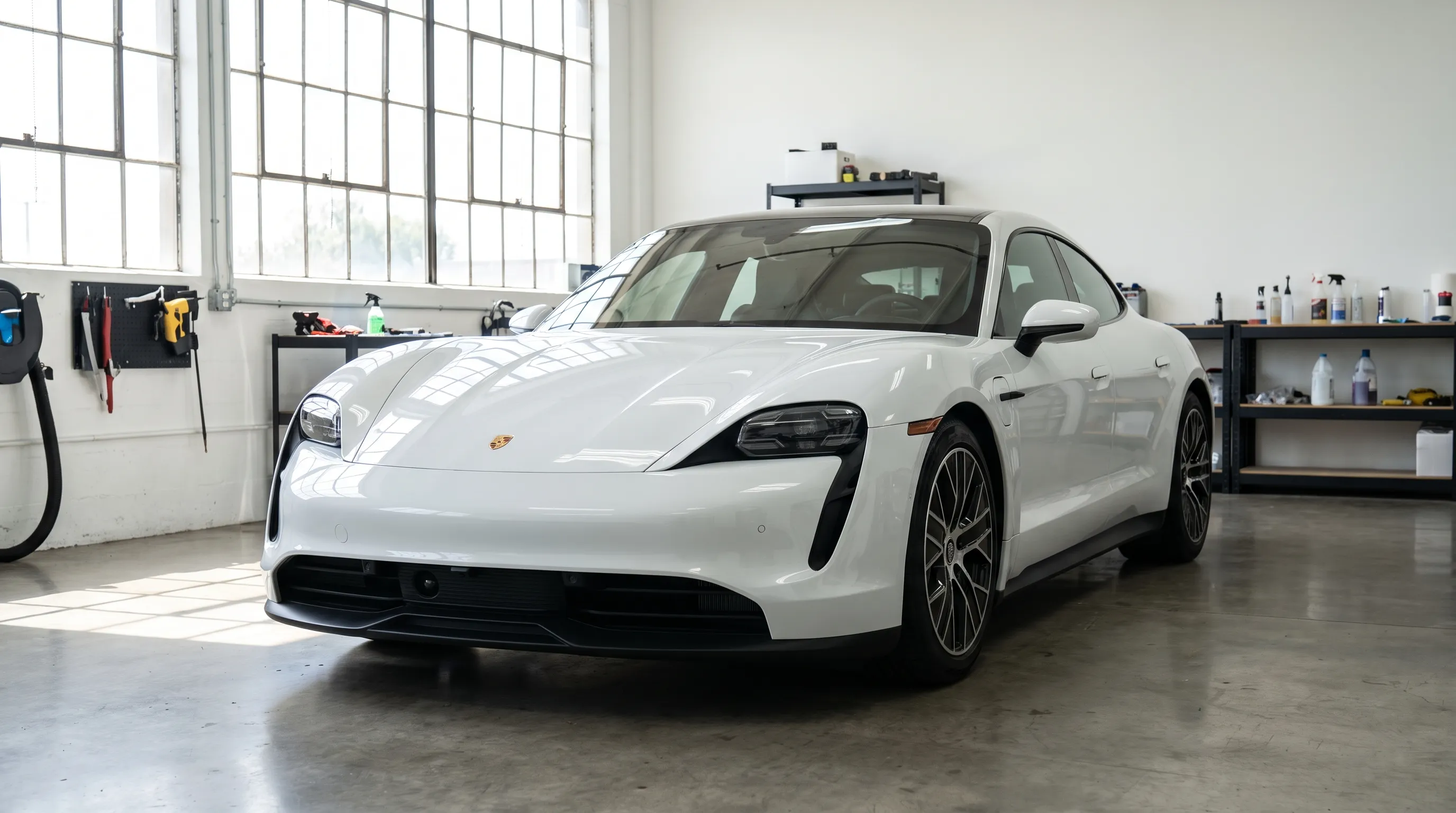
Does PPF increase resale value? In many cases, yes—but not because an appraiser automatically adds the installation invoice to the vehicle's price. Paint protection film creates value by preserving factory paint, reducing visible wear, and removing reasons for a dealer or private buyer to negotiate downward.
The return is strongest on valuable vehicles, high-mileage highway cars, rare factory colors, and models where repainting a bumper or hood creates a costly condition or originality problem. PPF is less likely to repay a full-body installation on a low-value vehicle that sees limited road exposure.
Does PPF Increase Resale Value?
Clear PPF can increase the amount an owner ultimately receives at resale by keeping the vehicle closer to the upper end of its condition range. Vehicle valuation systems consider exterior condition, including scratches, dents, paint defects, and evidence of bodywork. A cleaner exterior gives an appraiser fewer deductions to make.
That distinction is critical. PPF is usually not valued like a factory option, upgraded engine, or premium trim package. The financial benefit appears in the condition it preserves beneath the film.
Consider two otherwise identical three-year-old vehicles. One has a chipped bumper, sandblasted rocker panels, etched insect residue, and a hood that needs correction. The other retains uniform factory paint because its impact zones were protected from delivery.
The protected vehicle is easier to photograph, easier to retail, and less expensive for a dealership to prepare. In a private sale, it also gives the buyer fewer defects to use during negotiation.
A 2026 manufacturer-sponsored dealership survey reported that 92% of participating U.S. dealers believed PPF could create higher resale value, with claimed gains reaching up to 15% in some cases. That is encouraging directional evidence, but it is not a universal appraisal rule or a guaranteed percentage return.
The survey came from within the PPF industry, and vehicle values still depend on model demand, mileage, history, location, color, mechanical condition, and the quality of the film installation. The credible conclusion is not that every wrapped car becomes worth 15% more. It is that dealers recognize preserved paint as economically useful.
How PPF Creates a Financial Return
Preserving Factory Paint
Factory paint has an advantage that even skilled refinishing cannot reproduce completely: it is original to the vehicle. The color, film build, panel transitions, texture, and curing process remain consistent with the rest of the body.
On ordinary used vehicles, buyers inspect for mismatched color, overspray, rough masking edges, unusual paint thickness, and bodywork. On collector and enthusiast vehicles, originality receives even closer scrutiny. Documentation, condition, and original components can materially change how two examples of the same model are valued.
PPF protects that original finish from the damage most likely to trigger refinishing. Gravel impacts, road sand, loading scratches, insect residue, light abrasion, and repeated washing contact the sacrificial polyurethane surface before reaching the clearcoat.
It cannot prevent dents, collision damage, or every stone impact. A large or sharp object can puncture the film. Yet avoiding even one bumper repaint or blended hood repair can preserve both appearance and the vehicle's original-paint story.
Reducing Reconditioning Costs
Dealers do not appraise only what a vehicle is worth after preparation. They also calculate what must be spent before the vehicle can be photographed, displayed, certified, and sold.
That expense may include paint correction, chip repair, touch-up work, bumper refinishing, stain removal, detailing, and panel repainting. Estimated reconditioning costs are commonly deducted from a trade-in offer because the dealership needs room to perform the work and retain a retail margin.
Professional repainting is not trivial. Depending on vehicle size, paint chemistry, panel damage, color matching, blending, and regional labor rates, quality refinishing can cost thousands of dollars. Metallic, pearl, matte, and multi-stage factory finishes raise the risk and expense further.
PPF can turn those costs into a film-replacement decision rather than a paint-repair decision. A damaged bumper film may be removed and replaced while the factory clearcoat remains intact beneath it.
The film replacement still costs money, but the repair remains confined to a removable protective layer. There is no new paintwork to disclose, no color-matching concern, and no permanent reduction in factory originality.
Strengthening Buyer Confidence
A clean vehicle creates a stronger first impression, but documented protection adds something more useful: evidence of deliberate ownership. An installation invoice, product record, dated photographs, maintenance history, and warranty information show that the owner planned for preservation rather than preparing the vehicle only when it was time to sell.
That documentation is particularly effective in private-party and enthusiast sales. A buyer may not pay the full original PPF cost, but the records can support a higher asking price and reduce suspicion about hidden paint defects.
Clear gloss PPF also retains the factory appearance. Unlike a bright color change or heavily customized exterior, it generally does not narrow the buyer pool around one person's styling preference.
Matte or satin PPF requires more consideration. It can make a vehicle highly desirable to the right buyer, but some shoppers will prefer the original gloss finish. Sellers can either market the transformation deliberately or remove the film professionally to reveal the preserved factory paint.
Owners considering that aesthetic change should review matte vs. gloss PPF before installation.
How to Calculate the ROI of PPF
The ROI calculation should include more than a hypothetical resale premium. The financial return combines avoided damage, reduced reconditioning, protection of original paint, and any higher sale price that the vehicle's condition can support.
A practical formula is:
PPF ROI = (avoided repair costs + avoided resale deductions + remaining protection value − installation and removal costs) ÷ total PPF cost × 100
"Remaining protection value" represents the benefit received while owning the vehicle. The owner drove without accumulating the paint damage that would otherwise require correction, refinishing, or acceptance of a deteriorated exterior.
Consider an illustrative full-front installation costing $2,000. During ownership, the film prevents $1,200 of bumper and hood refinishing, avoids a $700 appraisal deduction for visible damage, and saves $400 in heavy paint correction before sale.
The preserved financial value is $2,300. Subtracting the $2,000 installation cost leaves a $300 net return, equal to a 15% financial ROI before considering the owner's use of the protection.
If the same installation prevents only $600 in damage on a low-mileage city vehicle, the direct financial return is negative. The film may still provide cosmetic and emotional value, but it did not pay for itself through resale alone.
The result changes quickly as vehicle value and repair complexity increase. Preventing a repaint on a rare multi-stage color or carbon-composite panel can be worth substantially more than preventing the same-sized defect on an inexpensive solid-color commuter.
| Financial factor | How PPF can affect it | Resale impact |
|---|---|---|
| Stone chips and road rash | Reduces direct impact damage on covered panels | Fewer condition deductions |
| Factory paint | Reduces the need for refinishing | Preserves originality and buyer confidence |
| Pre-sale detailing | Limits clearcoat correction required beneath the film | Lower reconditioning expense |
| Dealer preparation | Delivers cleaner retail-ready panels | Less cost deducted from the trade offer |
| Private-party presentation | Supports cleaner photographs and inspection results | Stronger asking-price position |
| Film condition | Good film demonstrates care; failed film creates work | Can increase or reduce buyer confidence |
Do not calculate ROI by assuming that every dollar spent on PPF will be added to the sale price. Buyers pay for the resulting vehicle condition. The installation invoice explains how that condition was preserved, but it does not function as a guaranteed refundable deposit.
Which Vehicles Receive the Strongest PPF ROI?
The strongest return normally occurs where paint damage is likely and expensive. Vehicle value matters, but exposure and ownership plans matter as well.
| Vehicle profile | Recommended strategy | Likely ROI outlook |
|---|---|---|
| Luxury or performance daily driver | Full front plus rockers and rear impact zones | Strong |
| Exotic vehicle or rare factory color | Full-body coverage | Potentially strongest |
| High-mileage highway commuter | Full front and mirror caps | Moderate to strong |
| Track-day or canyon-driven vehicle | Full front, rockers, doors, and rear quarters | Strong when damage exposure is frequent |
| Mainstream urban commuter | Bumper or targeted impact coverage | Moderate and coverage-dependent |
| Low-value or short-term vehicle | Selective high-impact coverage | Limited for full-body installation |
Luxury and performance vehicles benefit because panel refinishing is expensive and buyers often inspect paint condition closely. Complex colors, aluminum panels, composites, sensors, cameras, and trim removal can raise the cost of restoring even apparently minor damage.
Highway mileage strengthens the argument because exposure is cumulative. A vehicle driven 15,000 miles per year at highway speeds will normally face more forward-impact events than a garage car covering 2,000 urban miles.
Collector and enthusiast vehicles gain another benefit: preservation of originality. Market value can vary significantly between cars of the same year and model based on condition, documentation, rarity, and modifications. Protecting factory paint helps preserve one of the attributes buyers cannot reinstall later.
Leased vehicles are more situational. PPF can prevent excess-wear charges for large scratches and paint damage, but a full-body installation may cost more than the likely return. Targeted coverage on the bumper, hood edge, mirrors, door cups, and loading area is often more rational.
Coverage Strategy Matters
Full-body PPF produces the greatest physical coverage but not always the highest percentage ROI. The financially efficient package is the one that protects the panels most likely to create expensive deductions.
For most road vehicles, those panels are the front bumper, complete hood, front fenders, mirror caps, rocker panels, lower doors, and the area ahead of or behind the rear wheels. Loading sills and door edges may also justify targeted protection.
A partial hood strip costs less, but it leaves the upper hood exposed and creates a visible seam. On vehicles with low noses or significant highway use, complete-panel coverage usually delivers better protection and a cleaner resale presentation.
Crystal Premium Clear Bra is the logical starting point when the goal is preserving the factory gloss finish. The engineering behind its TPU, top coat, and adhesive construction is outlined on the Crystal Shell technology platform.
Installers and dealers should build packages around actual exposure rather than pushing identical coverage onto every vehicle. The Crystal Shell dealer program provides a route for professional product and application support.
What Can Reduce the Resale Benefit?
PPF helps resale only when the film, installation, and removal protect the asset. A low-quality installation can create visible defects that make the vehicle harder to sell.
Edges that lift, collect dirt, or stop awkwardly across a panel weaken the presentation. Adhesive distortion, stretch marks, trapped contamination, knife damage, and uneven gloss give an appraiser new problems to notice.
Aged film can also work against the seller. Yellowing, cracking, staining, delamination, and hardened edges suggest deferred maintenance. Remove or replace failed film before listing the vehicle rather than expecting the buyer to accept an unknown correction cost.
Professional removal is especially important on repainted panels. Factory paint is normally more predictable, while weak aftermarket clearcoat, poor preparation, or insufficient cure can separate during film removal.
Film should not be installed over fresh or questionable bodywork without inspection. A paint-thickness gauge, visual edge inspection, and repaint disclosure help the installer identify risk before adhesive reaches the panel.
Color and matte films need a clear resale strategy. A distinctive finish may attract one buyer and repel another. Keep photographs of the original paint, retain installation records, and decide whether the car will be marketed with the film or returned to its factory appearance.
Owners also reduce their return by installing protection after significant damage has already occurred. PPF does not erase existing chips, scratches, or etched clearcoat. Paint correction may improve the appearance, but missing paint still needs repair before film installation.
The ideal timing is early in ownership, preferably after inspection and preparation but before sustained highway exposure. The more original condition the film begins with, the more condition it can preserve.
Maintenance records strengthen the final sale. Keep the installation invoice, product name, installation date, coverage map, installer details, warranty documents, and photographs taken before and after installation.
Before appraisal, inspect the film under direct daylight and workshop lighting. Clean contamination, address lifted edges, replace heavily damaged sections, and decide whether removal would reveal a stronger presentation.
Conclusion: Protect the Condition Buyers Pay For
PPF can increase resale value, particularly on vehicles where factory paint, exterior condition, and repair history strongly influence buyer decisions. Its return does not come from turning film into a dollar-for-dollar factory option. It comes from preventing the defects, repainting, and reconditioning costs that reduce an offer.
The positive case is strongest when PPF is installed early, applied to the correct impact zones, maintained properly, and supported by clear documentation. High-value vehicles, highway-driven cars, rare colors, and collector-grade examples have the most financial exposure—and therefore the most to preserve.
Choose coverage according to expected damage rather than the largest package available. Start with Crystal Premium Clear Bra, compare protection economics in the factory-direct PPF guide, or contact Crystal Shell to plan a coverage strategy around your vehicle's use and long-term value.