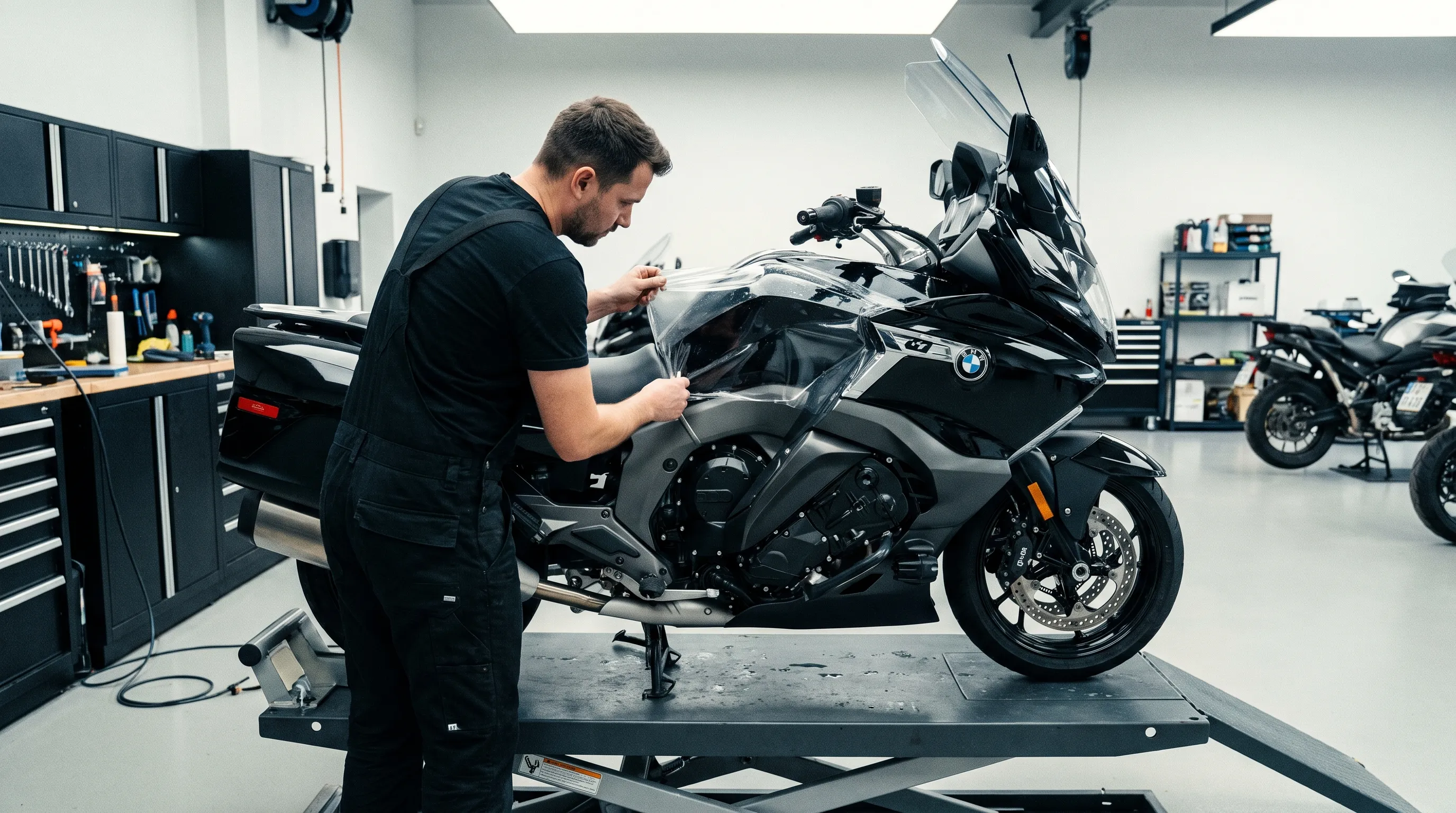
PPF for motorcycles and RVs uses the same basic protection principle as automotive film: place an elastic, replaceable TPU barrier between a vulnerable finish and road damage. The difference is geometry, substrate, heat exposure, and the way each vehicle accumulates damage.
A motorcycle may need protection across only a few square feet, but those panels can be expensive painted fairings, carbon-fiber trim, or fuel-tank surfaces that receive constant rider contact. An RV presents the opposite problem: large painted or gelcoat panels exposed to insects, gravel, branches, UV radiation, and aggressive washing.
Can PPF Be Used on Motorcycles and RVs?
Yes, PPF can protect properly prepared painted surfaces on motorcycles, motorhomes, travel trailers, powersports vehicles, and other specialty transportation. The film can reduce damage from stone chips, abrasion, insects, road film, luggage contact, boots, and repeated cleaning.
The product is not universal across every visible surface. Standard automotive PPF should normally be limited to smooth, stable, fully cured substrates approved by the film supplier.
Avoid installing conventional body PPF over:
- Exhaust systems, cylinder heads, or high-temperature engine components
- Textured, porous, chalked, or heavily oxidized gelcoat
- Rubber, silicone, flexible seals, or soft interior trim
- Loose decals, failing graphics, or unstable repaint work
- Moving joints, hinge contact points, or sliding seals
- Fuel-contaminated surfaces that cannot be fully cleaned
Adhesion should be tested whenever the substrate is not conventional cured automotive paint. A film that bonds well to a painted fairing may behave differently on gelcoat, molded plastic, powder coat, clear-coated carbon fiber, or an RV graphic.
Surface condition matters as much as material identity. PPF does not restore oxidized gelcoat, stabilize failing clearcoat, or repair loose paint. It preserves the condition placed beneath it.
Where Motorcycles Need PPF Most
Motorcycles concentrate damage into small areas. A rider’s knees, jacket zipper, tank bag, boots, gloves, road debris, and fuel residue repeatedly contact the same panels.
Fuel Tanks and Rider Contact Zones
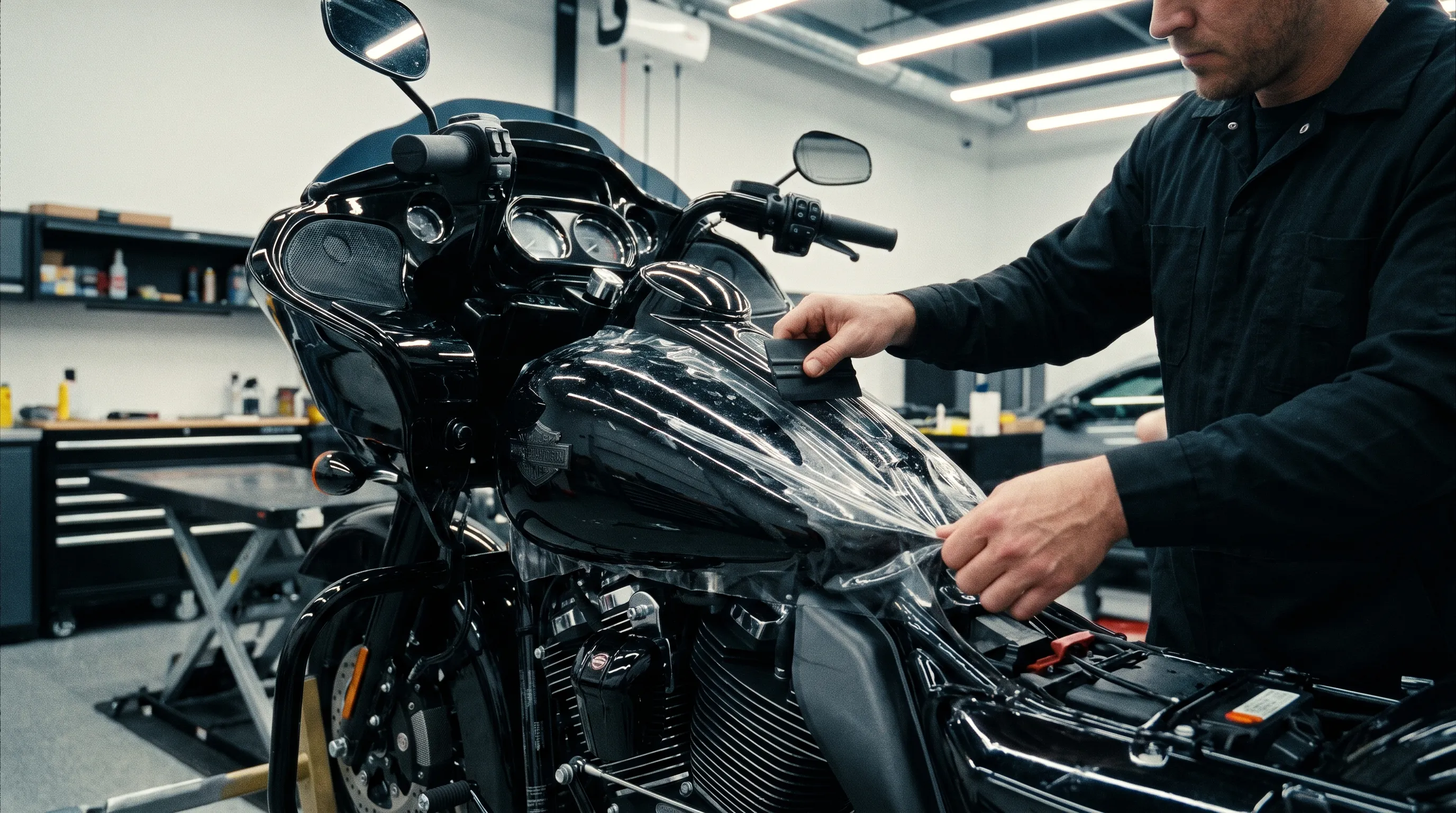
The fuel tank is often the highest-value PPF application on a motorcycle. Clearcoat near the seat and knee areas develops scratches from riding gear, while the upper tank receives contact from zippers, buckles, luggage, and cleaning towels.
PPF can cover the complete painted tank or target the central and side contact zones. Full-panel coverage provides a cleaner visual result, but complex tank geometry may require several patterns or controlled seams.
Fuel resistance depends on the complete top-coat and adhesive system. Spilled gasoline should still be removed immediately. No installer should describe PPF as permission to leave fuel sitting on a warm tank.
Crystal Premium Clear Bra is the logical option when the owner wants to retain the factory gloss and graphics beneath the film. Its hydrophobic surface also helps reduce the cleaning effort required for insects, road film, and light contamination.
Fairings, Panniers, and Front Impact Areas
Front fairings, headlight surrounds, painted fenders, fork guards, and exposed side panels receive direct gravel and insect impact. On touring motorcycles, painted panniers and top boxes also collect boot marks, luggage scratches, and parking contact.
Coverage should follow the real damage pattern:
- Leading edge of the front fairing
- Painted front fender
- Lower fairings behind the front wheel
- Fuel tank and knee-contact sections
- Pannier tops and outer corners
- Tail section beneath luggage
- Painted frame covers and boot-contact zones
Carbon-fiber components need individual inspection. Clear-coated carbon can often accept film when the coating is smooth, fully cured, and strongly bonded. Raw, textured, porous, or heat-exposed carbon should not be treated as equivalent to automotive clearcoat.
Owners seeking a visual transformation can use Crystal Color Infused PPF instead of conventional styling vinyl. The material combines a broad selection of colors and shades with a thicker TPU-based protective construction.
Where PPF Works Best on RVs
RV owners face a different economics problem. Repainting a large front cap, matching aged graphics, or correcting damaged gelcoat can require substantial labor, scaffolding, masking, and downtime.
Covering every square foot is not always practical. Targeted PPF normally produces the strongest return by protecting the sections that receive the highest concentration of impact and contamination.
Painted Front Caps and High-Impact Panels
The front of a motorhome or travel trailer receives insects, gravel, sand, tree debris, road tar, and cleaning chemicals across a broad vertical area. Painted front caps, mirror housings, lower skirts, and leading body edges are strong candidates for protection.
Useful RV coverage zones include:
- Painted front cap and lower nose
- Mirror housings and camera surrounds
- Lower side panels behind the wheels
- Entry-door and luggage-door contact areas
- Painted corners exposed to branches
- Leading edges of slide-out sections
- Rear loading or towing contact zones
Large vertical panels can exceed common film widths, making seams unavoidable. Seams should follow graphics, body lines, panel joints, or other natural visual breaks rather than crossing an open painted area without a plan.
Installers must also account for rivets, trim strips, vents, service doors, seals, and panel movement. PPF should not bridge a moving joint or interfere with the compression of an RV weather seal.
Gelcoat and Fiberglass Require Extra Testing
Many RV bodies use fiberglass-reinforced panels finished with gelcoat rather than conventional automotive basecoat and clearcoat. Smooth, stable gelcoat may accept PPF, but chalked or oxidized gelcoat does not provide a reliable installation surface.
The surface must be fully cleaned, corrected where necessary, dry, and free from residual polish, wax, oxidation, and solvent. Applying film over failing gelcoat can lead to weak adhesion or substrate removal when the film is later replaced.
Test adhesion and removal in a concealed area before committing to a large installation. The test should remain in place long enough to experience heat, cooling, washing, and normal panel movement.
For gelcoat-focused applications, installers can evaluate Crystal Shell Marine Gelcoat Defense. The final product choice should match the substrate, environment, panel size, and written application limits rather than assuming that every exterior film is interchangeable.
What Makes Specialty-Vehicle Installation Different?
Most car installations begin with an established panel pattern and predictable clear-coated paint. Motorcycles and RVs create more custom work, more substrate variation, and more edges per square foot.
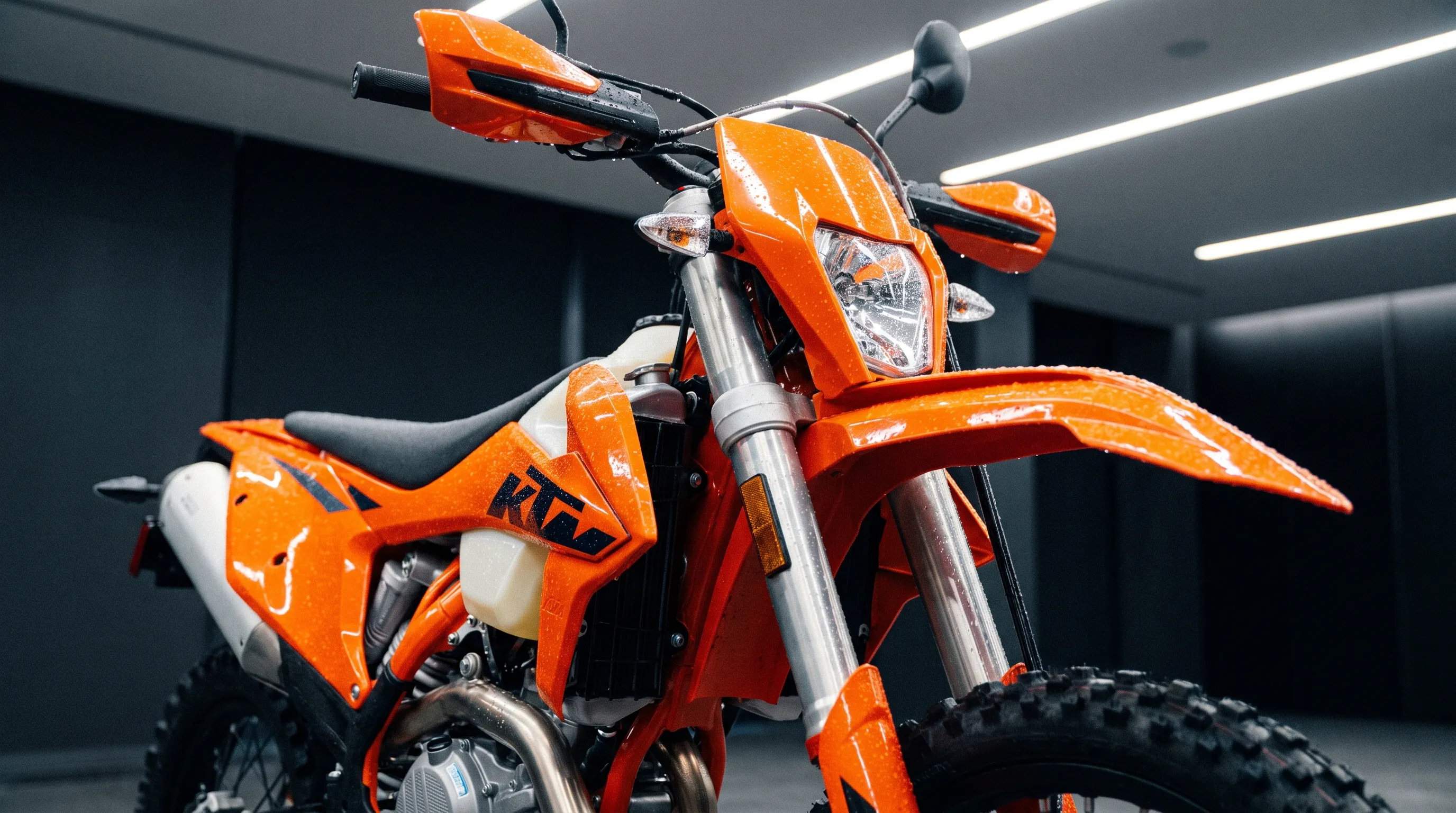
Motorcycle patterns are small but geometrically demanding. Tanks and fairings combine tight convex curves, narrow recesses, decals, vents, and exposed edges. Excessive stretch can create gloss distortion, edge tension, or visible changes in colored and satin film.
RV panels are physically easier in some areas but much larger. The installer must manage roll width, long straight seams, elevated work platforms, wind, dust, panel flex, and hundreds of inches of edge preparation.
Custom installations should favor plotted or templated sections where possible. Hand trimming remains useful, but a motorcycle tank or RV front cap should never become a cutting surface.
The safe workflow is explained in the blade vs. plotter PPF guide. Installers should use lifted-film trimming, cutting tape, templates, and controlled pattern extensions rather than tracing paint with uncontrolled blade pressure.
Temperature also changes the installation strategy. Motorcycle panels near the engine may become significantly warmer than surrounding bodywork during use. RV front caps experience intense sunlight across large areas and can expand differently from attached trim.
Do not place PPF directly beside exhaust outlets or over surfaces that exceed the film’s published service temperature. Thermal cycling can increase edge tension, soften adhesive, or accelerate top-coat aging.
Specialty work also demands clean, purpose-built equipment. Crystal Shell Precision Install Tools support controlled squeegee pressure, narrow edge work, safe trimming, and moisture evacuation across compact motorcycle panels and large RV sections.
Which Crystal Shell Film Fits the Application?
Crystal Shell uses advanced aliphatic TPU technology developed by Lubrizol across its premium PPF platform. The material provides the elastic carrier required for impact absorption, while product-specific top coats control finish, surface recovery, and hydrophobic behavior.
Every Crystal Shell film includes a hydrophobic functional surface. That helps release water, insects, road film, salt residue, and light contamination, but it does not make motorcycles or RVs maintenance-free.
| Application goal | Recommended Crystal Shell product | Typical specialty-vehicle use |
|---|---|---|
| Preserve factory gloss | Crystal Premium Clear Bra | Motorcycle tanks, painted fairings, RV front caps, mirrors |
| Create a satin finish | Crystal Satin Stealth | Matte motorcycles, selected painted RV panels, custom accents |
| Change color and protect | Crystal Color Infused PPF | Motorcycle restyling, panniers, accent panels, specialty builds |
| Protect stable gelcoat | Marine Gelcoat Defense | Approved smooth RV gelcoat or fiberglass applications |
| Protect glass impact zones | Crystal Vision Windshield Skin | Eligible RV or specialty glass after size and application review |
Crystal Satin Stealth is especially useful when a motorcycle already has OEM matte paint. Conventional gloss PPF can create an obvious patch, while a compatible satin film preserves the intended low-gloss appearance.
Crystal Color Infused PPF allows motorcycle and specialty-vehicle shops to combine restyling with protection. Installers should still evaluate heat exposure, substrate stability, seams, and color orientation before quoting a complete project.
For large RV glass, Crystal Vision Windshield Skin should be assessed separately from body PPF. Glass curvature, wiper operation, film dimensions, visibility requirements, and local regulations all need confirmation before installation.
The complete material architecture is explained on the Crystal Shell technology platform. Shops adding motorcycle or RV services can review product access and technical support through the Crystal Shell dealer program.
How to Maintain Motorcycle and RV PPF
Motorcycles should be cleaned after heavy insect exposure, fuel spills, chain lubricant overspray, or long rides in wet road conditions. Avoid directing high-pressure water into film edges, vents, badges, or fairing seams.
RV film should be washed from the top downward using pH-appropriate shampoo and clean, soft media. Long-handled brushes must remain clean because trapped grit can abrade several square feet with one pass.
Inspect the following areas regularly:
- Edges near motorcycle fuel caps and tank seams
- Fairing corners exposed to engine heat
- RV seams, rivets, vents, and trim transitions
- Areas struck by gravel behind wheels
- Film near moving doors, slides, and luggage compartments
- Sections exposed to pressure washing or aggressive chemicals
A punctured or lifted section should be repaired before contamination travels beneath the adhesive. Self-healing can reduce shallow surface marks, but it cannot rebuild film removed by a deep cut or sharp stone.
Hydrophobic performance can become masked by mineral residue, road film, or detergent buildup. Clean and decontaminate the surface before assuming that the functional top coat has failed. The mechanism is explained in the hydrophobic PPF guide.
Conclusion: Protect the Surfaces That Receive the Damage
Motorcycles and RVs prove that PPF is not limited to passenger cars. The material can protect painted tanks, fairings, panniers, front caps, mirrors, gelcoat, and other high-impact surfaces when the substrate and installation method are appropriate.
The strongest strategy is targeted rather than indiscriminate. Protect rider-contact areas and forward impact zones on motorcycles. On RVs, prioritize the front cap, mirrors, lower panels, entry areas, and surfaces where repainting or gelcoat repair would create substantial cost and downtime.
Start with Crystal Premium Clear Bra for clear protection, explore Crystal Color Infused PPF for protective restyling, or contact Crystal Shell to evaluate a motorcycle, RV, or specialty-vehicle application.