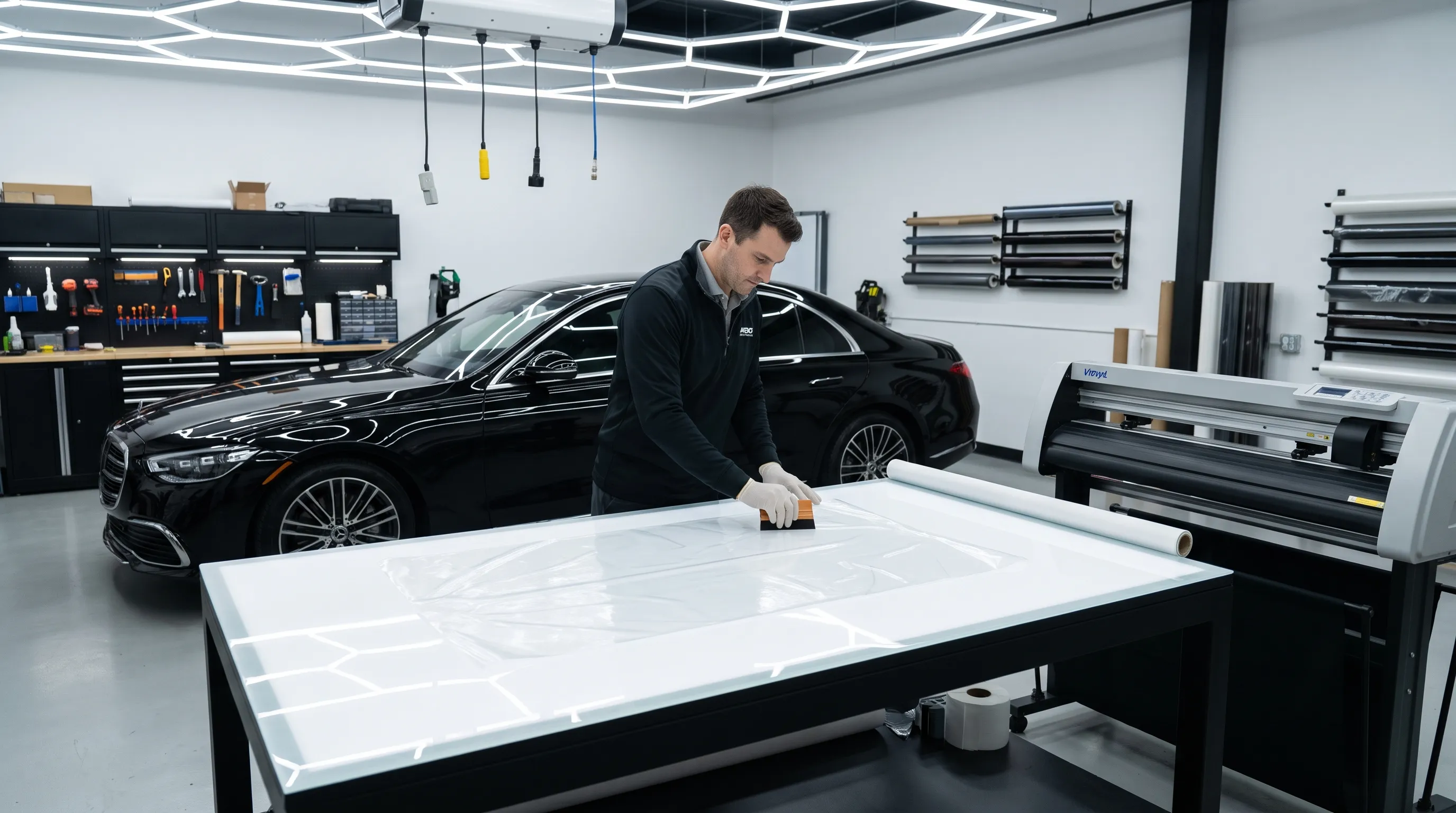
Blade vs. plotter PPF is often presented as a choice between craftsmanship and automation. That is the wrong comparison. A plotter controls repeatability and protects the paint, while skilled hand finishing allows selected edges to disappear into panel gaps.
The strongest installations normally use both methods. The pattern is machine-cut away from the vehicle, then adjusted, wrapped, and finished by an installer who understands tension, adhesive behavior, panel geometry, and blade risk.
What Is the Difference Between Blade and Plotter Installation?
A plotter cuts PPF from a digital vehicle pattern before the material reaches the paint. The software defines panel shape, sensor openings, badge locations, relief cuts, and the amount of material left around each edge.
Hand cutting places an oversized sheet on the vehicle and trims it around the panel. This gives the installer more freedom to extend coverage, wrap difficult edges, and compensate for unusual panel alignment.
The difference is not whether a knife exists in the shop. Plotter installations still require blades for separating material, trimming excess away from the vehicle, and finishing areas the pattern cannot resolve cleanly.
The real distinction is where the final cut occurs. Cutting on a work surface carries limited risk. Cutting directly over painted clearcoat can create a permanent line that remains hidden until the film is removed years later.
Why Plotter-Cut PPF Is the Safer Starting Point
A calibrated plotter can repeat the same pattern within fractions of a millimeter. That consistency matters when an installer completes several vehicles of the same model or replaces one damaged panel later.
Digital patterns also reduce disassembly. Accurate openings around parking sensors, cameras, headlamp washers, badges, and trim can limit the number of components that must be removed.
The largest advantage is paint safety. The main panel shape is cut before installation, so the installer does not need to trace every body line with a blade resting above the clearcoat.
Plotter patterns are not automatically perfect. Vehicle production tolerances, previous repairs, panel adjustment, software errors, and pattern age can produce a visible gap or poor alignment.
A standard pattern may leave approximately 1–3 mm of exposed paint around an edge. That gap improves installation speed and reduces lifting risk, but it can become visible on white film residue, dark paint, or panels viewed under direct lighting.
A premium installation therefore begins with a digital pattern rather than ending with one. The installer must inspect the actual vehicle and decide which edges should remain exposed, extended, or wrapped.
Where Hand Cutting Still Produces a Better Result
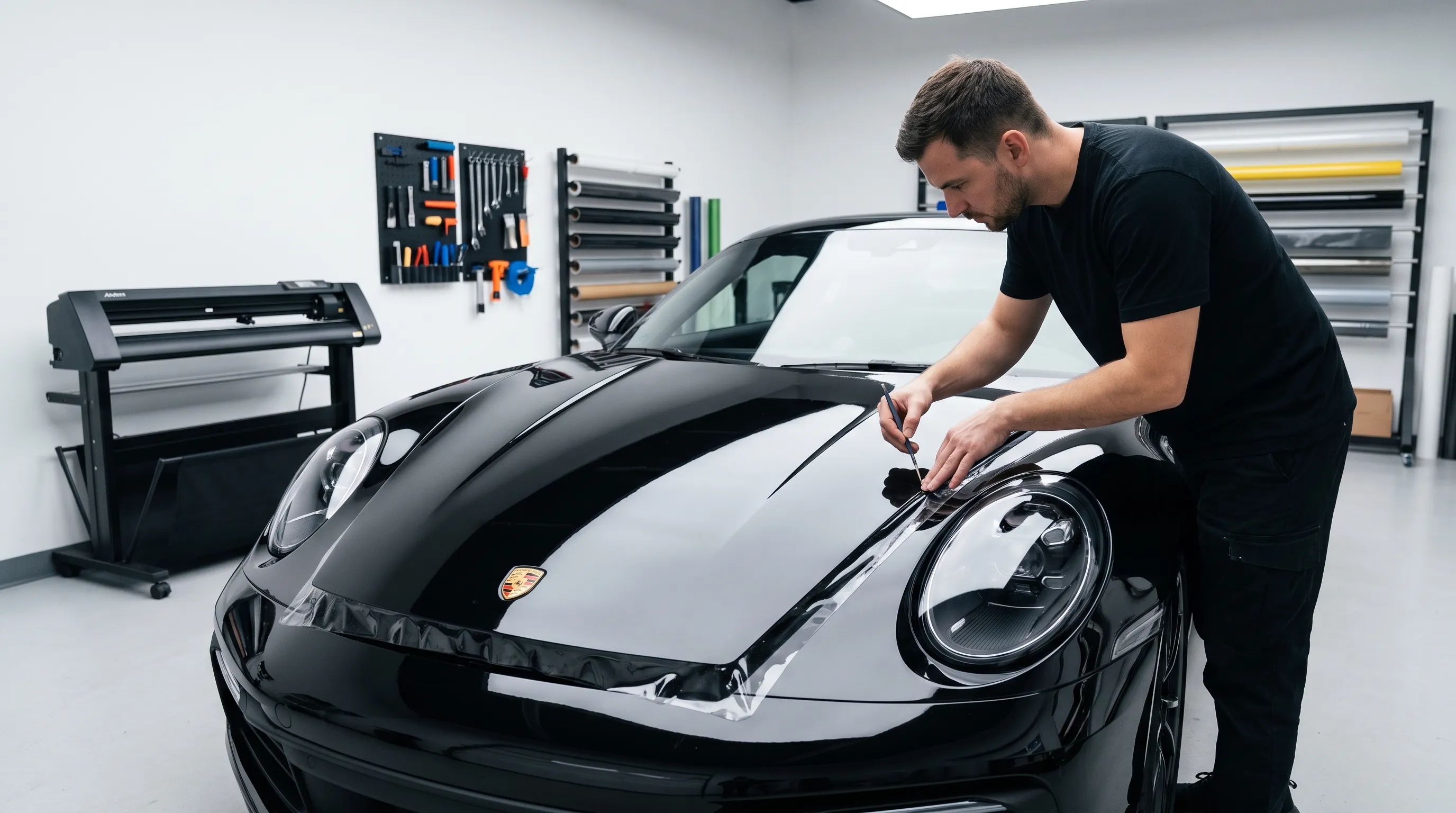
Hand finishing becomes valuable when a factory pattern cannot account for real panel geometry. Bumper corners, recessed vents, complex mirror caps, narrow pillars, and hand-built body panels often need local adjustment.
An installer may extend a plotter pattern by several millimeters so the film can wrap behind a hood, fender, or door edge. Once wrapped, the visible boundary moves away from the viewing surface and into a protected panel gap.
Hand cutting is also useful around aftermarket components. Splitters, replacement grilles, non-original badges, body kits, and repaired panels may not match the vehicle data stored in the pattern software.
That flexibility carries risk. A blade needs only enough pressure to score the clearcoat, not cut deeply into the paint. The damage may be invisible under the installed film but become obvious during later removal.
A responsible installer does not use the vehicle as a cutting mat. Whenever possible, the film is marked, lifted away from the paint, and trimmed while suspended or supported by a safe cutting tape.
The condition and geometry of the blade matter as well. A fresh, narrow-angle blade requires less force than a dull one. Excess pressure increases the chance of cutting through the liner, film, adhesive, and clearcoat in one uncontrolled movement.
How Installers Create an Invisible PPF Edge
Pattern Extension and Edge Wrapping
An invisible edge is usually created by moving the film termination away from the visible face of the panel. The installer extends the pattern, installs the main surface, then wraps the remaining material around a clean and accessible edge.
More material is not always better. An extension of approximately 3–6 mm may be enough for a simple hood edge, while deeper wraps require additional adhesive contact and careful tension management.
Edges should not be wrapped over wax, polishing oil, dust, or old adhesive residue. A hidden edge that lifts after two weeks is worse than a clean, exposed pattern edge that remains stable for years.
Some panels should not be wrapped. Tight gaps, sharp unfinished metal, fragile repaint work, bonded trim, and limited access can make an exposed edge the safer engineering choice.
Tension Control Matters More Than the Cut
A perfectly trimmed edge can still fail if the film is under excessive tension. TPU tries to recover toward its original dimensions, especially after heat exposure.
Stretching material aggressively around a bumper corner may look clean during delivery. After repeated cycles of summer heat, the film can pull back, lift from the edge, or distort the top coat.
The installer should distribute stretch across a larger area rather than concentrating it at the final 20–30 mm near the edge. Relief cuts must also terminate away from visible paint and high-stress corners.
Matte and satin film expose tension errors faster than gloss PPF. Stretch can flatten the surface microtexture and create a brighter patch even when the edge remains attached. The visual difference is covered in the matte vs. gloss PPF guide.
The Blade Must Never Become a Paint Tool
A knife is a material-cutting tool, not a method for tracing painted panels. Skilled installers use controlled blade depth, cutting tape, lifted-film trimming, and predictable hand position.
They also use purpose-built equipment. Clean squeegee edges reduce top-coat marking, narrow tuck tools position film without damaging trim, and controlled knives require less pressure than improvised hardware-store blades.
Crystal Shell Precision Install Tools are designed for this workflow: positioning, squeegeeing, trimming, edge work, and controlled finishing without treating the vehicle surface as disposable.
Blade vs. Plotter: Which Method Should You Choose?
For most modern vehicles, plotter-cut PPF should be the default. It reduces paint risk, controls repeatability, and allows the installer to plan sensor openings and panel alignment before the adhesive touches the vehicle.
Hand cutting should be reserved for controlled adjustments that improve coverage without placing the clearcoat at unnecessary risk. It is a finishing capability, not proof that the installer has greater skill.
| Installation factor | Plotter-cut pattern | Hand finishing |
|---|---|---|
| Paint safety | Strongest advantage | Depends heavily on technique |
| Repeatability | High after calibration | Varies by installer |
| Custom edge extension | Possible through pattern editing | Highly flexible |
| Complex aftermarket parts | May require custom scanning or modification | Useful for local adjustment |
| Installation speed | Usually faster | Usually slower |
| Risk of clearcoat scoring | Low when the pattern is pre-cut | High if cutting occurs directly on paint |
Car owners should ask three direct questions before approving an installation: Will patterns be plotted before application? Which edges will be wrapped? How does the installer prevent blades from contacting paint?
Installers should document any panel where wrapping is unsafe or impossible. A clearly explained 2 mm exposed edge is more professional than a forced wrap that lifts, traps dirt, or damages repaint work.
The film itself also affects edge quality. Adhesive stability, TPU recovery force, top-coat flexibility, and total construction thickness all influence how the material behaves around a narrow return.
Review the construction of Crystal Premium Clear Bra and the broader Crystal Shell technology platform when matching installation technique to film behavior.
Conclusion: The Best Installation Uses Both Methods Correctly
The blade-versus-plotter debate creates a false choice. Plotters deliver repeatability and reduce paint risk. Skilled hand finishing allows selected edges to wrap farther and disappear into the vehicle’s natural panel gaps.
The premium result comes from combining them: plot the main pattern, extend only the edges that benefit from wrapping, control tension, and keep every final blade movement away from painted clearcoat.
Use Crystal Shell Precision Install Tools for controlled positioning and finishing, or contact Crystal Shell for film and installation guidance.